Forest River Rockwood Geo Pro G16BH: Solar Power Setup Guide
The Forest River Rockwood Geo Pro G16BH is a lightweight, off-road capable travel trailer that comes pre-wired for solar. This guide walks through optimizing its 190W roof panel, upgrading battery banks, and managing loads for extended boondocking. Whether you’re a weekend warrior or a full-time traveler, these practical steps will help you get the most from your solar investment.
What Is the Standard Solar Setup on the G16BH?
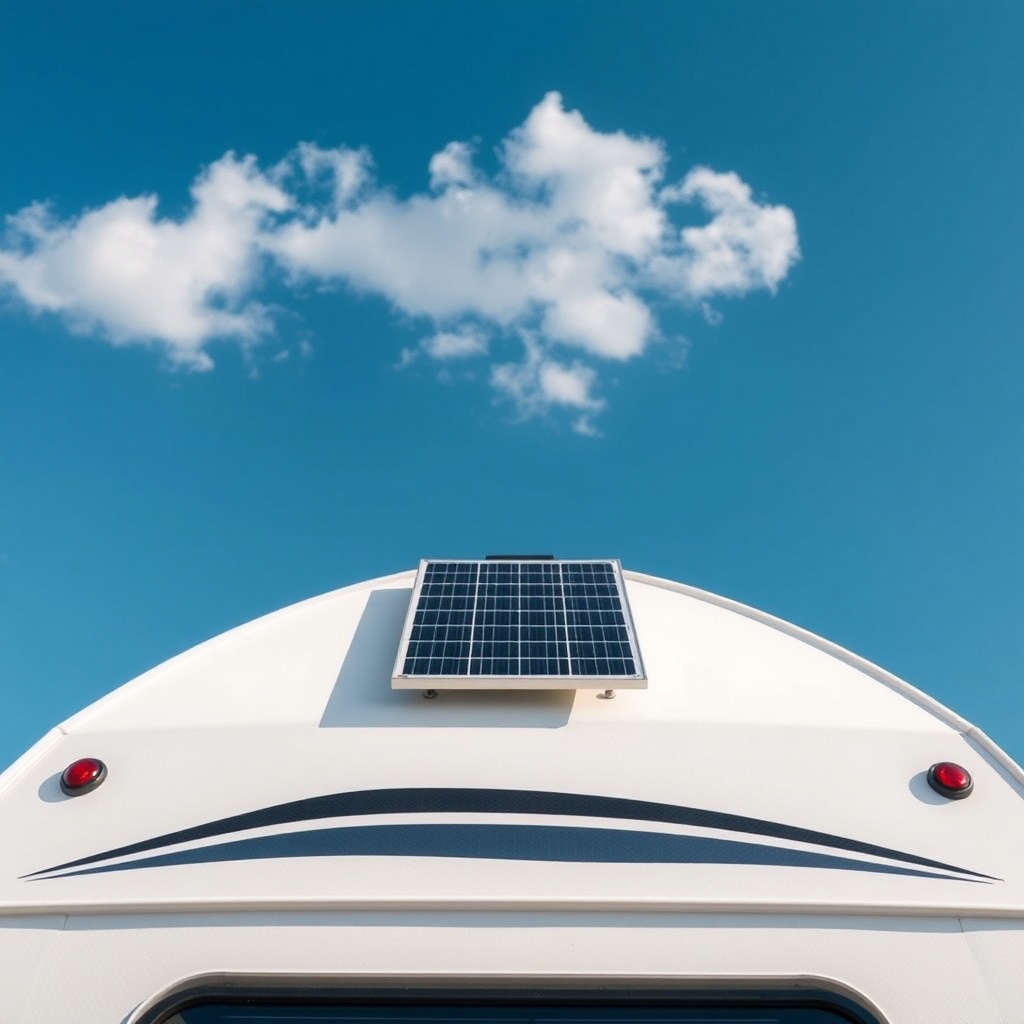
The 2024 and newer models of the Rockwood Geo Pro G16BH leave the factory with a single 190W monocrystalline solar panel mounted on the roof. This panel connects to a 30A charge controller (typically a Go Power! PWM unit) and feeds a single Group 24 deep-cycle battery (about 75Ah). The system includes a 1500W pure sine wave inverter for AC loads, but the inverter only runs when plugged into shore power or when the battery bank is over 12.5V. The solar panel alone can replenish about 40-50Ah of capacity per day under full sun, which covers lights, a water pump, and a small fridge (if running on propane). For heavier use—like a microwave or rooftop AC—you’ll need to expand the system.
Most owners find the stock battery underpowered for even a single night without sun. Upgrading to lithium is the first recommended step.
How Do I Upgrade the Battery for More Storage?
The stock Group 24 battery is heavy (about 50 lbs) and offers only 70–90Ah usable capacity if it’s a lead-acid. Switching to a lithium iron phosphate (LiFePO4) battery is the single most impactful upgrade. A 100Ah LiFePO4 battery weighs about 25 lbs and provides 100Ah of usable capacity (no depth-of-discharge worries). You can fit two 100Ah batteries side-by-side in the front pass-through storage compartment, giving you 200Ah—enough for two to three days of moderate use without solar input.
Critical: The stock Go Power! PWM charge controller is not ideal for lithium batteries. It can charge them, but it won’t fully top them off because it lacks a lithium-specific charging profile. Upgrade to a 30A MPPT charge controller (like the Victron SmartSolar 100/30, priced around $180/£145) to properly charge lithium. The MPPT controller also harvests about 20% more energy than a PWM controller in low-light conditions—significant on overcast days.
How Should I Wire the Solar Panels for Expansion?
The G16BH comes with a roof-mounted solar junction box and a pre-run 10 AWG wire down to the charge controller location (typically behind the power distribution panel). You can add up to two more 190W panels on the roof (for a total of 570W) by wiring them in series. Series wiring keeps the current under 20A (important for the 10 AWG wire) and improves performance when one panel is partially shaded. The stock Go Power! 30A controller can handle up to 450W of panels at 12V, but if you go above that, you need a larger controller. A 60A MPPT unit (Victron SmartSolar 100/60, about $320/£260) can handle up to 800W of panels.
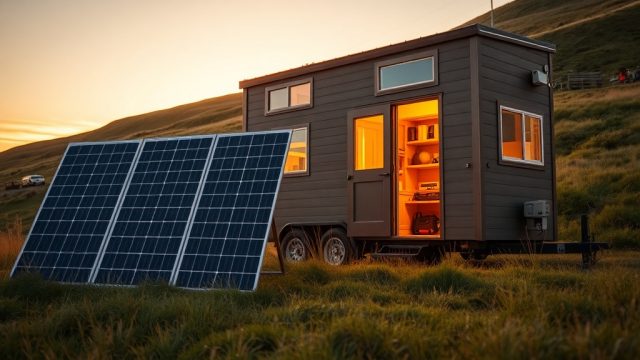
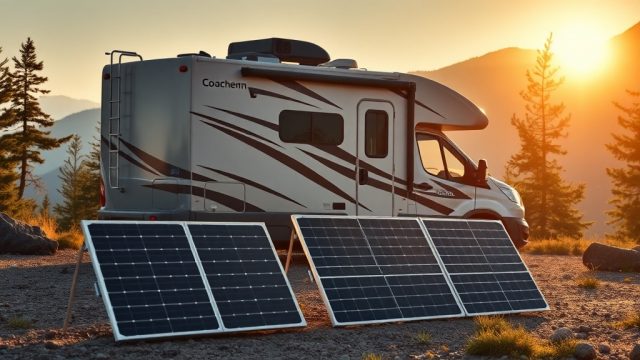
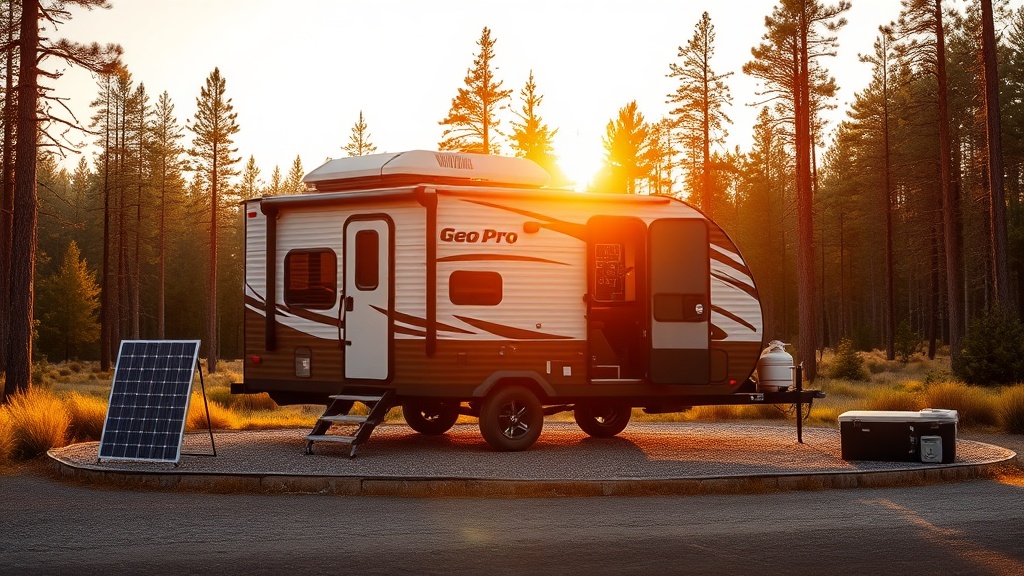
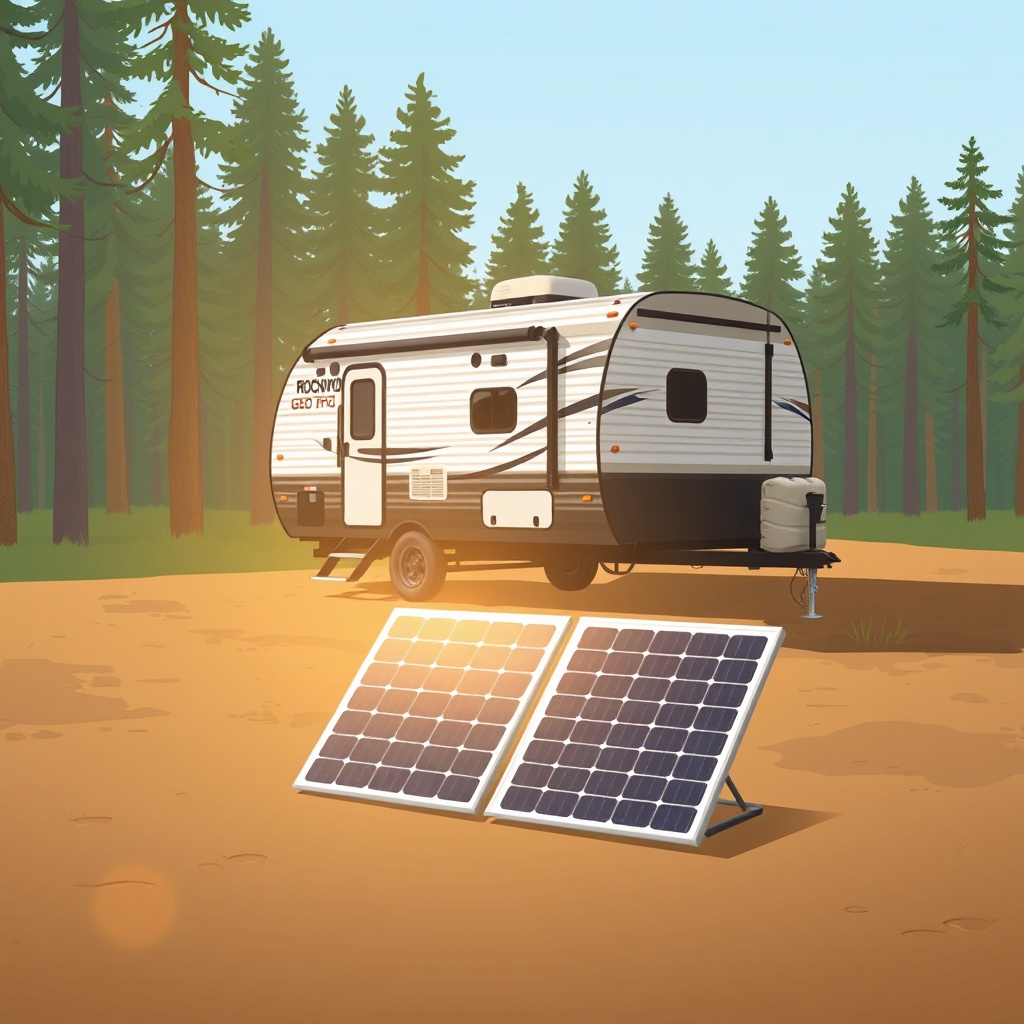
Portable panels are a simpler expansion route. A 100W or 200W folding panel (e.g., Renogy 200W, around $250/£200) can plug into the side-port on the G16BH (SAE connector). This adds 30–60Ah per day in direct sun, without any roof work.
Table: Solar Troubleshooting Severity Guide
| Issue | Severity | Action Needed |
|---|---|---|
| Battery voltage drops below 11.8V overnight | Needs attention soon | Reduce overnight loads; add a second battery |
| Solar controller shows zero amps in full sun | Needs attention soon | Check panel connections; test panel with multimeter |
| Inverter shuts off when microwave starts | Usually not urgent | Upgrade inverter to 2000W, or run microwave on generator only |
| Battery charge controller error code 08 | Needs attention soon | Reset controller; verify battery terminals are clean |
| Solar panel glass has small crack | Needs attention soon | Replace panel immediately to avoid water intrusion |
What Are the Realistic Power Budgets for Off-Grid Living?
A practical daily power budget for the G16BH when boondocking (no shore power) is around 70–100Ah per day for typical use: lights (LEDs draw about 0.5A each, so 10 lights for 4 hours = 20Ah), water pump (5A for 15 minutes = 1.25Ah), refrigerator (running on propane, 1A for the control board = 24Ah), and charging phones/tablets (2A for 2 hours = 4Ah). A laptop can add another 6Ah per hour of use. Running the furnace fan (7A) for 8 hours on a cold night consumes 56Ah alone—that’s more than half your daily budget.
With the stock 190W panel and a 100Ah lithium battery, you’ll comfortably cover lights, pump, fridge, and electronics for 2–3 days before the battery dips below 50%—provided you get at least 4 hours of full sun daily. If you add a second 100W portable panel and a second 100Ah battery, you can extend that to 5–7 days or run the furnace without worry.
How Do I Manage High-Load Appliances?
The G16BH’s stock 1500W inverter can run a small microwave (about 1000W draw), a coffee maker (800W), or a hair dryer (1500W), but only if the battery bank is fully charged and you keep the draw under 1200W continuous to avoid inverter shutdown. The rooftop air conditioner (13,500 BTU) draws about 1200W continuously plus a 2000W starting surge—the stock inverter cannot handle it. You’ll need a dedicated generator (like a Honda EU2200i, about $1,200/£950) or a much larger inverter (3000W) and a 400Ah+ battery bank to run the AC for any length of time.
Practical tip: Use the microwave only during high-sun hours (11am to 3pm) when the solar panels are generating peak power. That way, the microwave draws directly from the panels, not the battery.
What Owners Say
Dan from Colorado: “I put two 100Ah lithium batteries in my G16BH and upgraded to a 30A Victron MPPT. Even on cloudy days, I get enough power for lights, water pump, and the furnace fan. The stock panel is fine if you’re mostly in the Southwest sun.”
Linda from Michigan: “The solar port on the side is great—I plug in a 200W folding panel when I’m parked in the shade. Doubles my daily harvest. Also replaced the battery with a 100Ah LiFePO4; the stock lead-acid died after one season.”
Frequently Asked Questions
Can I run the air conditioner on solar alone?
Not with the stock setup. The G16BH’s roof AC requires about 1200W running, plus a 2000W surge. A single 190W panel and 1500W inverter cannot handle it. You would need at least 600W of panels, a 3000W inverter, and a 400Ah lithium battery bank, plus a generator for heavy use.
How long does it take to fully charge the stock battery from the solar panel?
In full sun (5 peak sun hours), the 190W panel delivers about 50Ah. The stock Group 24 battery (75Ah capacity, 50% usable) needs about 37.5Ah to recharge from 50% discharge—roughly 4 hours of full sun. A 100Ah lithium battery from 20% discharge would need about 7 hours of full sun.
Is the stock charge controller compatible with lithium batteries?
The stock Go Power! 30A PWM controller can charge lithium batteries, but it lacks a lithium-specific profile. It may not fully top off the battery (terminating at 13.8V instead of 14.4V), leaving 10–20% capacity unused. Upgrading to an MPPT controller is recommended for optimal charging.
Can I add a second solar panel to the roof?
Yes. The G16BH roof can accommodate a second 190W panel (same size). Use the factory junction box and wire in series. You’ll need to upgrade the charge controller if you exceed 450W (the stock controller’s limit). Space is tight between the existing panel and the roof edges, but most owners fit a second panel next to the first with standard mounting brackets.
What size wire is pre-run for solar on the G16BH?
Factory pre-wire is 10 AWG (copper) from the roof junction box to the charge controller location. This is adequate for up to 30A (or about 380W at 12V). For expansion beyond 450W, run a 6 AWG wire for voltage drop reduction over longer runs.
Does the G16BH have a solar-ready plug for portable panels?
Yes. There is a standard SAE connector (2-pin) on the driver-side exterior near the front. This allows plugging in a portable panel. The connector is wired directly to the battery (through a 20A fuse). Use it for adding a 100W to 200W portable panel without any modification.