Why Is the Coachmen Beyond 22RB Kitchen So Challenging for Dishwashing?
The Coachmen Beyond 22RB is a standout in the tiny RV world, offering a surprisingly spacious kitchen layout for a 22-foot rig. However, its compact counter space and limited under-sink area mean that standard countertop dishwashers often don’t fit. Owners quickly learn that washing dishes by hand in a tiny sink is a daily chore that eats into travel time. This guide explores the best compact dishwasher options tailored specifically for the 22RB’s tight kitchen footprint, helping you reclaim hours of your journey.
From slim under-counter models to portable units that roll into place, we break down the specs, costs, and installation tips. Whether you’re boondocking off-grid or plugged into full hookups, these solutions make kitchen cleanup effortless.
What Are the Space Constraints in the Coachmen Beyond 22RB Kitchen?
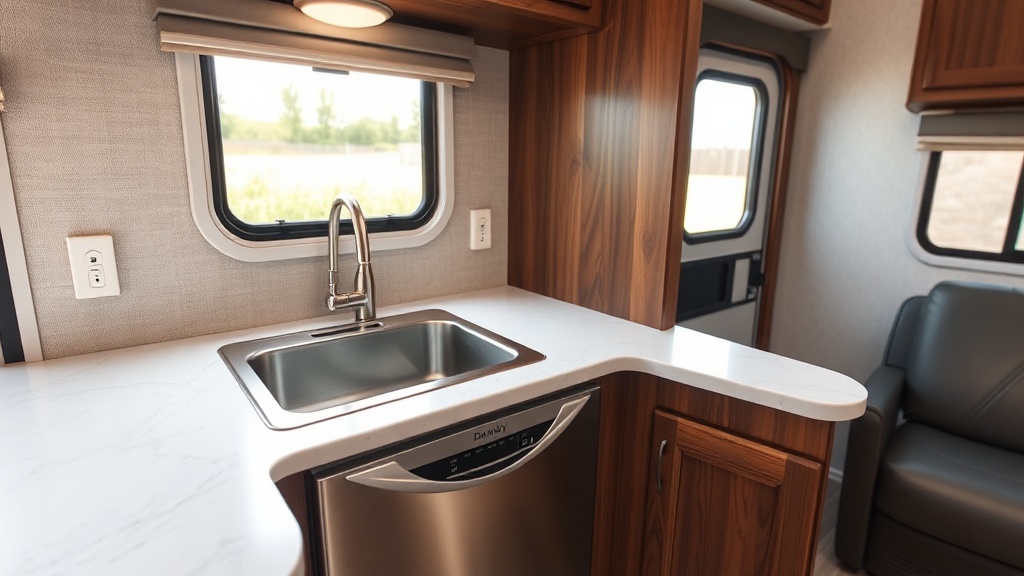
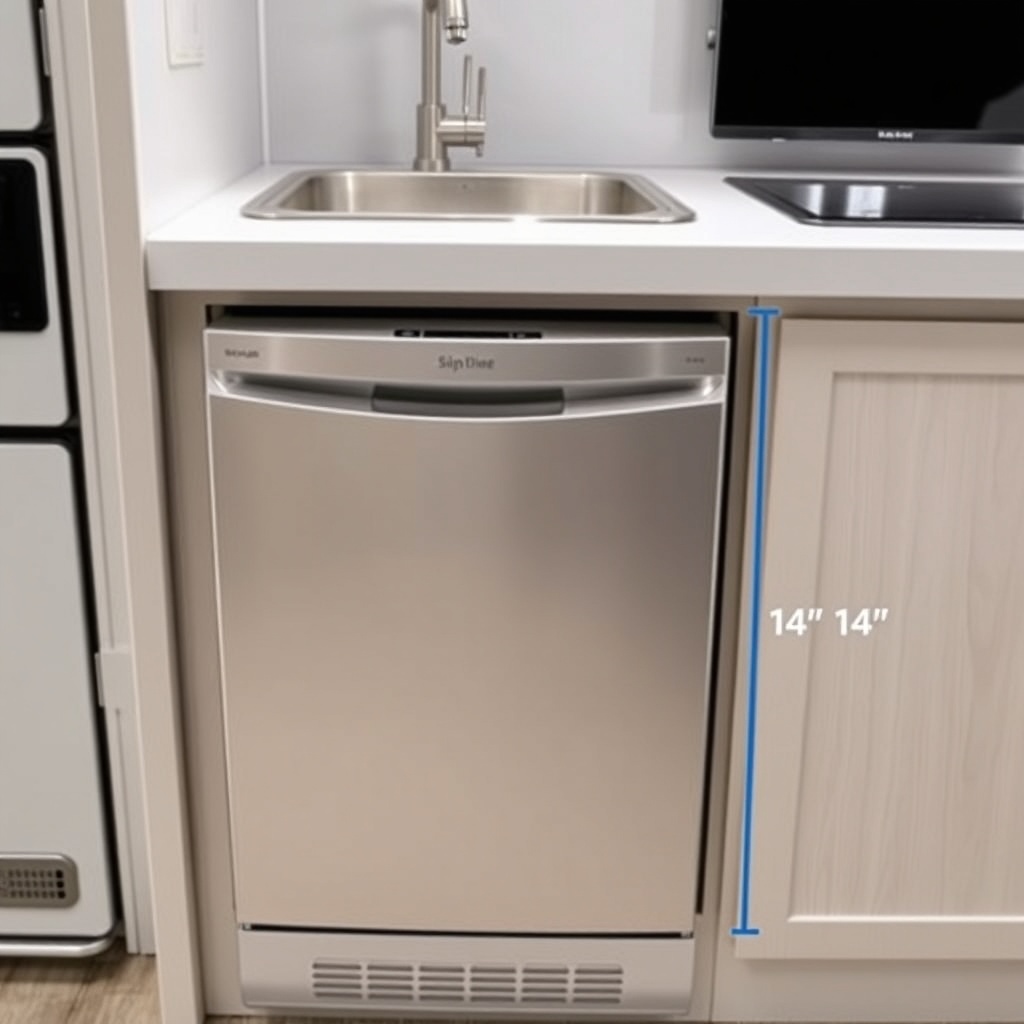
Before selecting a dishwasher, you must measure the available area. The 22RB kitchen features a single-basin sink (roughly 20 inches wide) with a small adjacent counter. The under-sink cabinet typically holds a trash bin, water heater, and some plumbing, leaving only about 14 inches of width by 12 inches of depth for a dishwasher. Standard countertop models require at least 18 inches of width, so the 22RB demands a non-standard solution.
Additionally, the kitchen lacks a dedicated 20-amp circuit near the sink; the standard outlet is a 15-amp GFCI. This limits energy draw to about 1,200 watts. Portable dishwashers that plug into a standard wall outlet are ideal, as they don’t require hardwiring. The rig’s freshwater tank capacity (20 gallons) also affects how many loads you can run before refilling.
- Under-counter space: 14” W x 12” D x 18” H (after plumbing)
- Countertop available: 36” W x 22” D (shared with stovetop cover)
- Power limit: 12.5 amps max (1,500W peak) via standard 15A circuit
- Water inlet: Standard 3/8” garden hose connection (optional bypass kit)
Which Compact Dishwasher Models Fit the 22RB’s Dimensions?
Three models stand out for their small footprint, energy efficiency, and ability to work with the 22RB’s limitations. Below is a detailed comparison of the top contenders as of 2025.
| Model | Type | Dimensions (W x D x H) | Water Usage per Cycle | Power Draw | Price (AUD) | Key Feature |
|---|---|---|---|---|---|---|
| Danby DDW1802MWP | Countertop | 18.5” x 17.3” x 20.6” | 5.3 litres | 950W | A$499 | Fits on 36” counter, 6 place settings |
| Klarstein Gourmet 6 | Portable (freestanding) | 17.7” x 16.5” x 21.8” | 6 litres | 1,100W | A$579 | Compact, easy roll-away storage |
| COMFEE’ KDT6L115B | Under-counter (modified fit) | 17.4” x 16.2” x 19.7” | 6.5 litres | 1,200W | A$649 | Stainless steel interior, low noise |
Note: The Danby DDW1802MWP is the most popular for the 22RB because it fits the counter space when you remove the stovetop cover or use a Coachmen Beyond 22RB: Space-Saving Table Review and Alternatives to create a temporary ledge. The Klarstein model is best for those who want to store the dishwasher away when not in use. The COMFEE’ requires minor cabinet modification (cutting a support brace) but offers a built-in look.
How Do You Install a Dishwasher in the 22RB Without Major Modifications?
Installation for a countertop model is straightforward: place it near the sink, connect the included quick-connect adapter to the kitchen faucet, and plug into the GFCI outlet. Portable models like the Klarstein come with casters and a 1.5-metre hose that reaches the sink drain when rolled close. For one-time installation, use RV-safe silicone sealant around the hose connection to prevent leaks.
Steps for countertop installation (Danby example):
- Turn off water and disconnect the sink sprayer hose (if present).
- Remove the aerator and attach the included 3/4-inch adapter to the faucet threads.
- Connect the dishwasher’s inlet hose to the adapter; hand-tighten only to avoid cross-threading.
- Place the dishwasher on the counter, level it using the rear legs.
- Run a test cycle with the drain hose in the sink to confirm no leaks.
For the COMFEE’ model under the counter, you must remove the lower cabinet shelf and cut a 5-inch duct for air circulation. This is a permanent change but increases counter space. If you later install a Coachmen Beyond 22RB: Best Composting Toilets for Tiny Bathrooms, ensure the exhaust fan doesn’t vent into the same cabinet.
What Electricity and Water Supply Modifications Are Needed?
The 22RB’s 15-amp GFCI circuit handles up to 1,200W continuously. Most compact dishwashers draw between 900W and 1,200W during the heating phase, so you cannot run the microwave or air conditioner simultaneously. Install a dedicated 20-amp circuit if you plan to upgrade. For water, the standard RV city water connection works, but you’ll need a pressure regulator to prevent hose burst.
If boondocking, connect a portable solar panel to charge the batteries. The Bosch 12V pump in the 22RB can fill a 5-litre tank for the dishwasher if you add a manual pump kit. For detailed solar integration, read our Coachmen Beyond 22RB: Portable Solar Panels Guide.
How Do You Optimize Dishwasher Use for Off-Grid Adventures?
When running on batteries, choose a model with a “eco” cycle that uses 6 litres of water and 800W. pre-rinse dishes with cold water to avoid heating energy waste. A typical load uses about 1.2 kWh, which drains a 100Ah battery to 50% depth of discharge. Pair with a 200W solar panel to recharge in 3-4 hours of full sun.
Use biodegradable detergent for grey water compliance. The 22RB’s grey tank holds 23 gallons (87 litres), so you can run 10 small loads before dumping. For dry camping, collect rinse water for toilet flushing—learn more in our Coachmen Beyond 22RB: Best Composting Toilets for Tiny Bathrooms article.
What Owners Say About Their Dishwasher Experiences in the 22RB
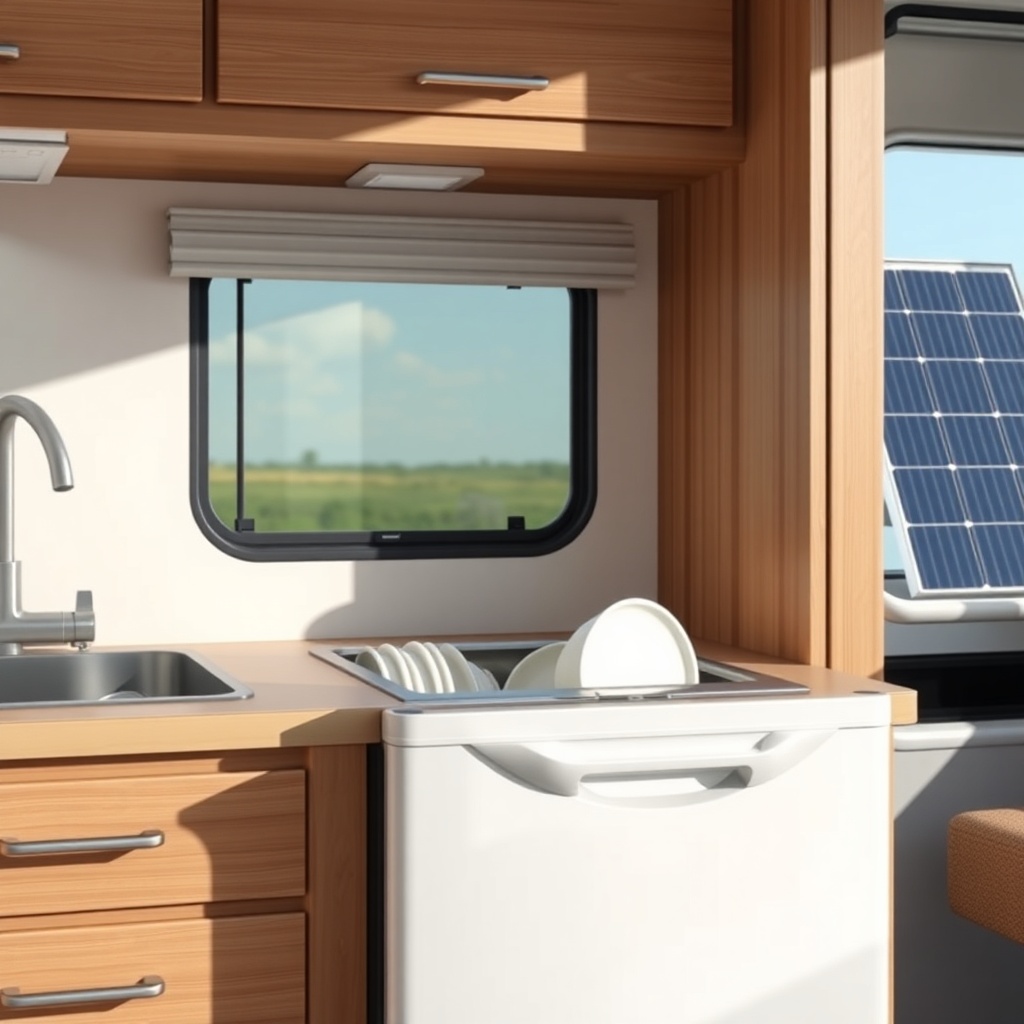
Owner reviews from Australian RV forums highlight the Danby DDW1802MWP as the easiest to live with. “We removed the flip-up table next to the sink and placed the Danby on a custom wooden stand that matches the cabinetry,” writes Sarah M. from Queensland. “It holds all our dishes for two, and the quiet cycle is under 50 dB—perfect for evening cleanup.”
Another owner, Mark T. from Victoria, prefers the Klarstein for portability: “We store it in the pass-through storage under the bed when not using. The wheels make it easy to roll out to the picnic table for outdoor washing. The 1.2kW draw is fine with our 300W solar setup.” For the COMFEE’ model, owner Jeff R. notes, “Cutting the cabinet took an hour, but now we have an extra countertop for coffee prep. We hardwired it to a 20A breaker.”
Common frustrations: the Danby’s hose is too short for some sink layouts, requiring a 1-metre extension. Also, countertop weight (about 18 kg) can stress the 22RB’s countertop supports—add a lower bracket if needed.
Frequently Asked Questions
1. Can I use a full-size dishwasher in a 22RB?
No. A standard 24-inch dishwasher requires at least 24 inches of width and 30 inches of depth, which the 22RB’s kitchen cannot accommodate without major structural changes.
2. Do I need a special water regulator?
Yes, use a 40-50 psi regulator to avoid damaging the dishwasher’s solenoids. RV park water pressure can exceed 80 psi.
3. How often must I refill the water tank when dishwashing?
With a 20-gallon fresh water tank, you can run about 8 cycles (average 6 litres each) before needing to refill for drinking water. Use a separate container for dishwashing if boondocking.
4. Is a portable or countertop dishwasher better for small RV?
Portable models are more flexible but require storage space. Countertop models are simpler to install but use valuable counter space. For the 22RB, most owners choose countertop due to limited floor space.
5. Can I run the dishwasher on solar panels?
Yes, with a 200-300W solar panel and a 100Ah lithium battery, you can run one eco cycle per day in full sun. Pair with a pure sine wave inverter rated for 1,500W continuous.
6. What detergents are safe for RV grey water tanks?
Use phosphate-free, biodegradable dishwasher pods or liquid. Avoid chlorine bleach and rinse aids with harsh chemicals to protect the grey tank seals and comply with national park regulations.