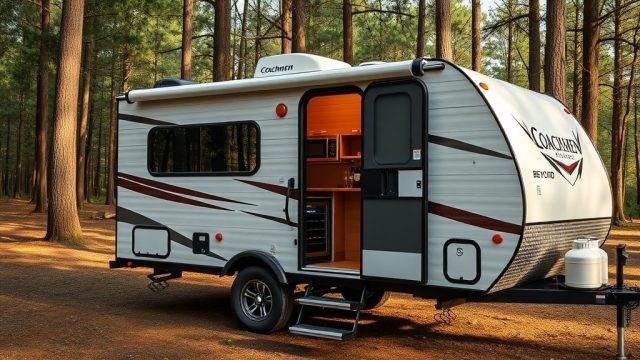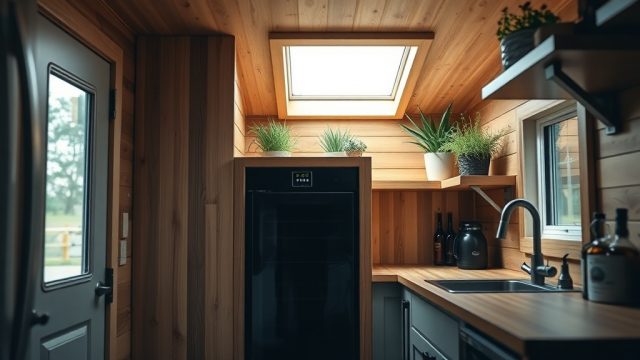
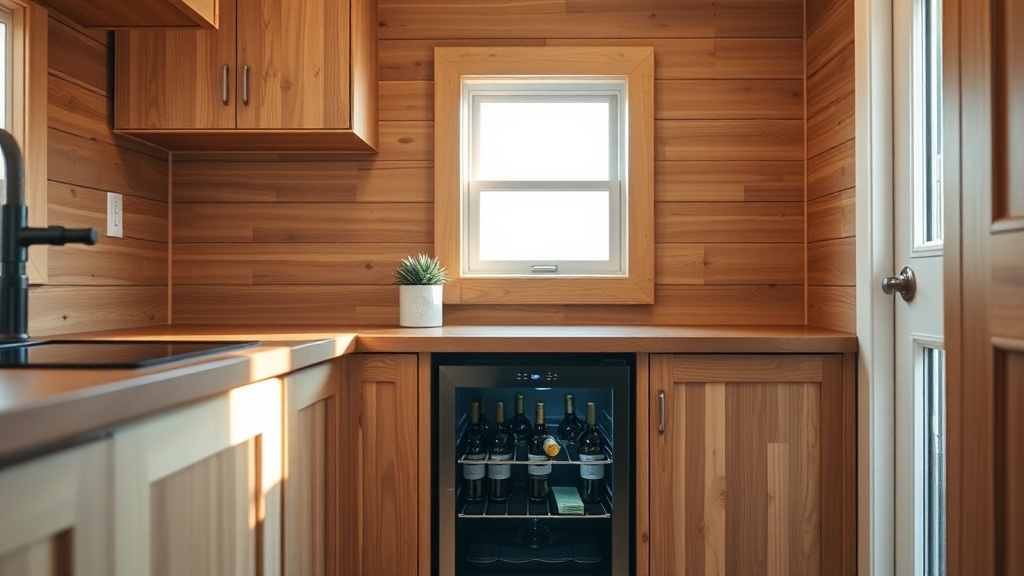
What Makes the Tiny House Custom Build by Tumbleweed Ideal for Wine Storage?
The Tiny House Custom Build by Tumbleweed is renowned for its meticulous space engineering, blending portable living with uncompromised style. For wine enthusiasts transitioning to tiny living, integrating a compact wine fridge is not merely a luxury—it becomes a necessity for preserving vintage quality without sacrificing square footage. Tumbleweed’s modular floor plans, such as the Cypress and Indie, offer dedicated kitchen zones that can accommodate under-counter wine coolers without overwhelming the overall footprint. These builds prioritize vertical storage and multi-functional cabinetry, making them uniquely suited for specialized appliances like a 15-bottle thermoelectric wine fridge.
Selecting the best compact wine fridge for a Tumbleweed home involves balancing cooling performance, energy efficiency, and dimensional compatibility. Most Tumbleweed models feature a standard 24-inch-wide cabinet opening, but the depth (typically 22 to 24 inches) can vary depending on the wall construction. Homeowners should measure the rough opening carefully, accounting for ventilation gaps—a vital step for condenser-type units. Thermoelectric coolers are generally preferred over compressor-based models because they produce less noise, vibrate minimally, and draw less power—critical factors when the wine fridge is installed near sleeping lofts or off-grid solar setups.
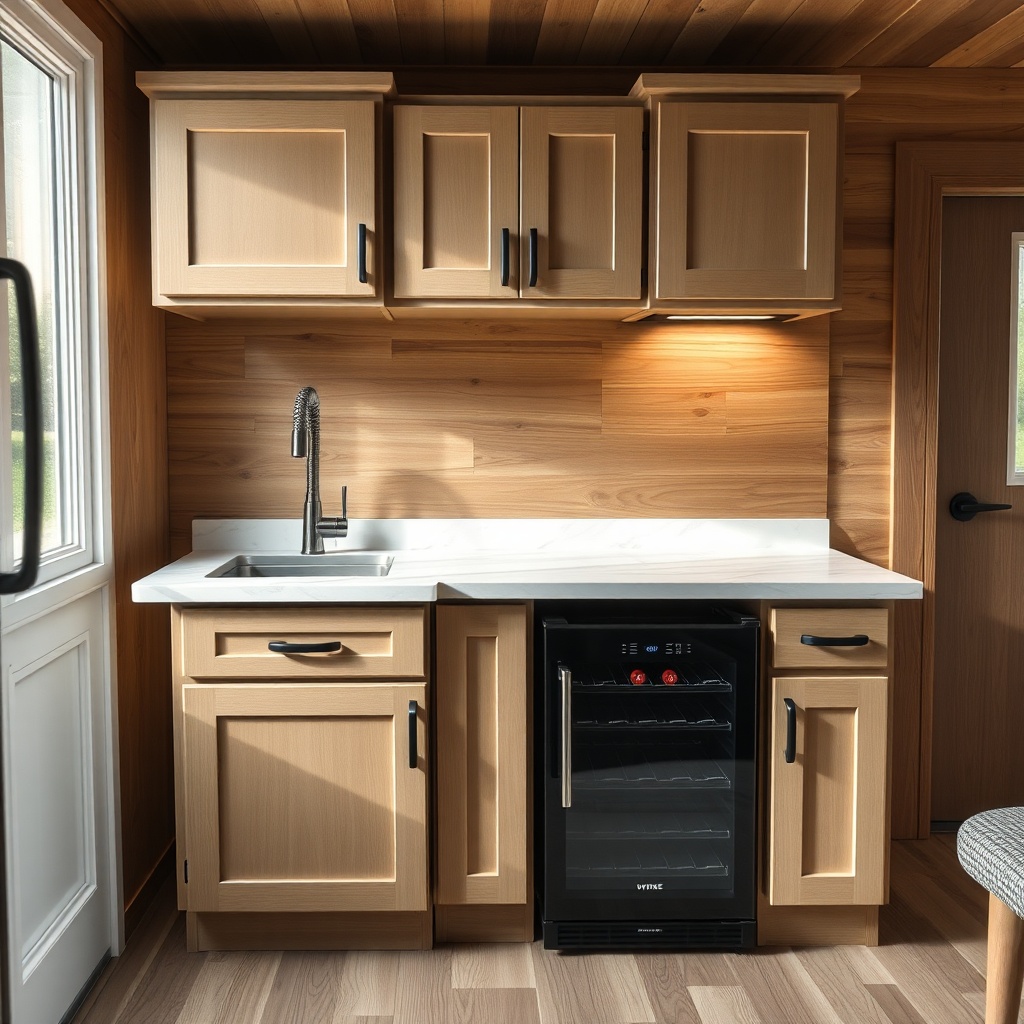
Which Compact Wine Fridge Capacity Suits a Tumbleweed Kitchen Best?
Capacity directly influences both storage and spatial demands. In a Tumbleweed Custom Build, the kitchen counter rarely exceeds 6 linear feet, so every inch counts. The optimal range for a tiny house wine fridge is 8 to 18 bottles—enough to host a dinner party or stock a weekly selection without encroaching on precious pantry space. A 12-bottle model, for instance, fits neatly into a 15-inch-wide cabinet slot, leaving room for adjacent drawers or spice racks.
For couples or solo enthusiasts who entertain occasionally, a 15-bottle capacity is the sweet spot. It allows for 5 whites, 5 reds, and a few sparkling or rosé bottles, all stored at their respective ideal temperatures in single-zone or dual-zone configurations. In a Tumbleweed, dual-zone fridges (one temperature for red and another for white) are trickier to install because they require more depth and often have taller profiles. However, units like the Kalamera 15-inch built-in dual-zone model measure just 17.7 inches in depth, making it compatible with the shallow counters typical of Tumbleweed designs. For reference, a standard 18-bottle unit averages 14.5 inches wide and 32 inches tall—a manageable size for under-counter installation in the Cypress model’s kitchen area.
What Are the Top Thermoelectric Models for Tumbleweed Homes?
Thermoelectric cooling is the gold standard for tiny houses due to its silent operation and low energy draw—typically under 60 watts. Tumbleweed owners who rely on solar generators often pair them with a thermoelectric wine fridge to keep power consumption minimal. The following table compares three top-performing models that fit seamlessly into a Tumbleweed Custom Build:
| Model | Capacity | Dimensions (W x D x H) | Power Draw | Price (GBP) | Best For |
|---|---|---|---|---|---|
| Whynter CHC-12S | 12 bottles | 15.75 x 17.5 x 24.75 in | 55W | £195 | Low-noise, off-grid setups |
| Kalamera 15-inch Built-in | 15 bottles | 14.96 x 17.72 x 25.98 in | 65W | £230 | Dual-zone, shallow counters |
| NewAir AW-181E | 18 bottles | 14.5 x 17.7 x 24.4 in | 58W | £210 | Taller cabinets, compact footprint |
Installation Note: All three models are designed for free-standing or built-in use, but Tumbleweed’s tight ¾-inch ventilation gaps require models with front-venting capability. The Whynter CHC-12S includes a front-venting kit, while the Kalamera has a 2-inch rear clearance requirement—something to account for when planning cabinet depth. Many builders choose to recess these units slightly and add a decorative grille for airflow.
How Does a Compact Wine Fridge Work with Tumbleweed’s Solar and Compact Dryer Setups?
Energy integration is a major consideration for Tumbleweed owners, especially those who pair their wine cooler with other essential appliances. A thermoelectric wine fridge draws less than 1 kWh per day, making it compatible with a base-level 12V solar system. In our guide to best compact solar generators, we highlight units like the Goal Zero Yeti 1000X, which can power a wine fridge for roughly 20 hours on a full charge—plenty for a weekend off-grid retreat. When combined with a compact dryer that peaks at 1,500W, careful load management is essential. Most owners run the wine fridge continuously and schedule dryer use during peak solar generation hours.
Placement also matters for thermal efficiency. Avoid installing the wine fridge next to the compact refrigerator, as both appliances generate heat. In Tumbleweed’s open-plan layouts, the wine fridge is best situated on the opposite side of the kitchen island or under a dedicated beverage counter. This separation prevents heat exchange that could force the compressor to work harder, increasing power draw by up to 15%. For off-grid dwellers, this distinction can mean the difference between a battery bank lasting two days versus three.
Should You Choose a Dual-Zone or Single-Zone Wine Fridge for a Tumbleweed?
The decision between single-zone and dual-zone cooling hinges on your collection diversity. A single-zone fridge (typically set between 45°F and 55°F) works best if you predominantly drink reds or whites. For example, the NewAir AW-181E maintains a consistent 54°F, perfect for storing Cabernets or Pinot Noirs. Conversely, a dual-zone model like the Kalamera 15-inch allows one zone to hold whites at 46°F while the other keeps reds at 55°F. This flexibility is ideal for Tumbleweed owners who entertain guests with varying preferences.
However, dual-zone units are generally 2 to 4 inches taller than single-zone counterparts, which can be a challenge in Tumbleweed’s low-profile kitchens. The Cypress model, for instance, has a standard counter height of 36 inches, leaving just 27 inches of under-counter clearance—sufficient for most single-zone coolers but tight for dual-zone models that often exceed 28 inches. Builders may need to raise the counter by 1.5 inches or opt for a shallow base cabinet to accommodate a taller unit. For those with a deeper collection, a dual-zone is worth the retrofit, but most Tumbleweed owners find a single-zone with a small wine rack accessory perfectly adequate.
What Are the Installation Requirements for a Built-In Wine Fridge in a Tumbleweed?
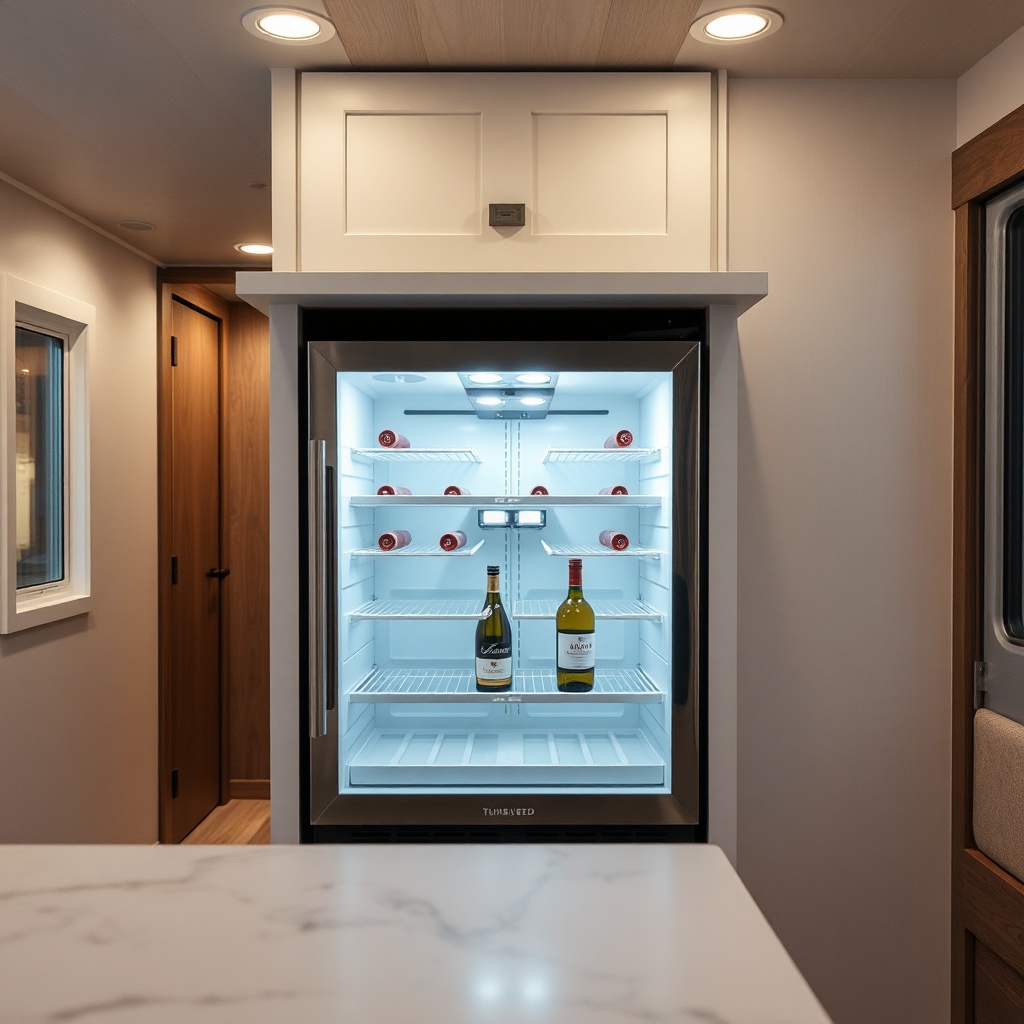
Installing a compact wine fridge in a Tumbleweed Custom Build requires meticulous planning for ventilation, sealing, and electrical access. Unlike standard homes, Tumbleweed’s walls are constructed with 2×3 or 2×4 framing, limiting cavity depth. For built-in units, the fridge must be front-venting to avoid trapping heat inside the cabinet. If the model has rear ventilation, you’ll need to cut a 2-inch gap in the back of the cabinet and possibly install a passive vent to the exterior—a step that adds complexity but is manageable with basic woodworking tools.
Electrical requirements are straightforward: most thermoelectric models use a standard three-prong 120V plug and draw under 1 amp. In a Tumbleweed, the wine fridge should be on a dedicated circuit if possible, especially when running alongside a loft ladder motorised lift (which draws up to 5 amps during operation). Many builders opt for a 15-amp breaker for the kitchen, with the wine fridge sharing the circuit with under-counter lights. A GFCI outlet is mandatory in tiny house kitchens per building codes. For off-grid systems, a 12V to 120V inverter rated at 300W continuous handles the fridge load without issue.
What Owners Say
Tumbleweed homeowners consistently praise the Whynter CHC-12S for its whisper-quiet operation and fit in their Cypress builds. “I was worried about vibrating bottles waking me up at night,” says Sarah, a Tumbleweed owner in Oregon. “But the thermoelectric compressor is so silent, I forget it’s there.” Others highlight the Kalamera’s dual-zone capability, with one reviewer noting that “having both reds and whites accessible for dinner parties is a game-changer in 220 square feet.”
On the practical side, several owners emphasize the importance of measuring twice before cutting. “The standard 24-inch cabinet width works, but the depth was tricky—my counter overhang was only 1 inch, so I had to install a spacer,” writes James, who built his Tumbleweed Custom in 2023. A common recommendation is to purchase the wine fridge before finalizing the kitchen cabinetry, allowing for custom adjustments to the face frame or toe kick. Most agree that a compact wine fridge enhances the tiny living experience, offering a touch of luxury without compromising the minimalist ethos.
Frequently Asked Questions
Can I install a compressor wine fridge in a Tumbleweed tiny house?
Yes, but it requires extra ventilation. Compressor models are taller and noisier, making them less ideal for open-plan tiny houses. Thermoelectric is recommended for lower power draw and silent operation.
What is the best size wine fridge for a Tumbleweed Cypress model?
A 12- to 15-bottle model fits best. The Cypress has a 27-inch under-counter clearance, so choose units under 26 inches in height. The Whynter CHC-12S at 24.75 inches tall is perfect.
How much does a compact wine fridge cost in the UK?
Prices range from £150 to £250 for a quality thermoelectric model. The Kalamera 15-inch dual-zone is around £230, while the NewAir AW-181E costs about £210.
Does a wine fridge need to be on a dedicated circuit in a tiny house?
Not necessarily. It shares a kitchen circuit fine, but avoid high-draw appliances like a kettle simultaneously. Off-grid, pair it with an inverter rated for 300W continuous.
Can I use a wine fridge off-grid on solar power?
Yes. Thermoelectric models draw about 60W, compatible with a 100Ah battery bank. Check our guide on compact rainwater collection systems for integrated water and power solutions.
How do I prevent condensation in a wine fridge in a humid tiny house?
Use a dehumidifier nearby or choose a model with auto-defrost. Tumbleweed builds with good vapour barriers rarely have humidity issues, but coastal owners should consider a silica gel packet.