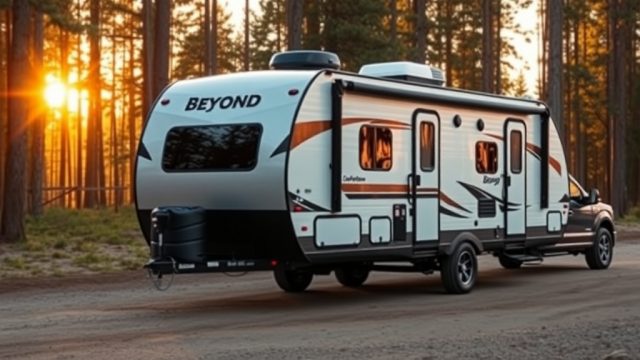
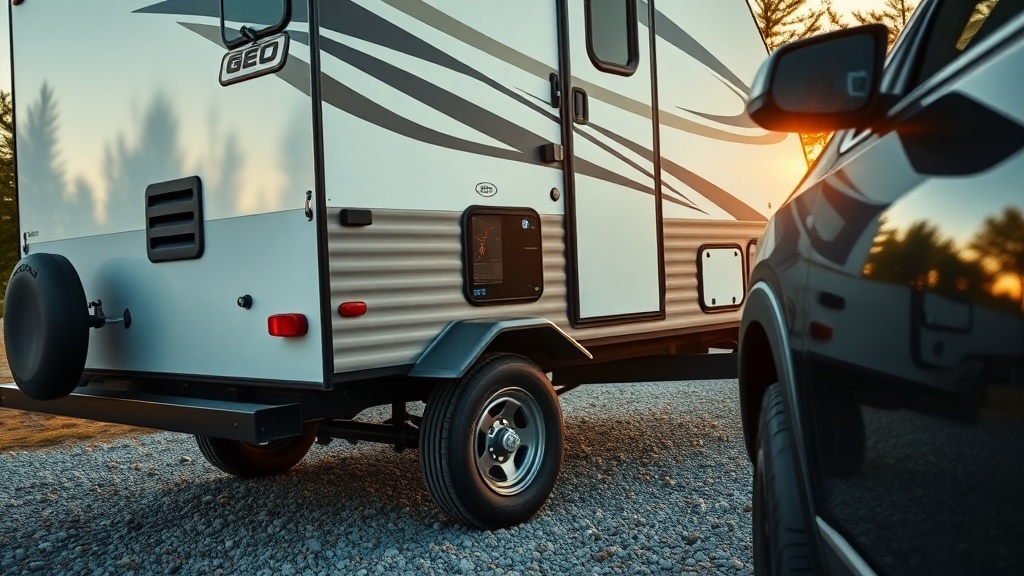
Why Tire Pressure Matters for the Forest River Rockwood Geo Pro G16BH
A properly inflated tire set is the backbone of safe towing—and for a compact travel trailer like the Forest River Rockwood Geo Pro G16BH, the margin for error is razor-thin. Under-inflated tires can lead to dangerous sway, reduced fuel economy, and even blowouts, especially when hauling the 3,200-pound dry weight plus cargo across uneven terrain. Over-inflation, on the other hand, creates a harsh ride that punishes the trailer’s lightweight construction and suspension.
This guide dives deep into the best tire pressure monitoring systems (TPMS) for the Geo Pro G16BH, blending real-world owner data with technical specs. Whether you’re a weekend warrior or a full-time tiny life enthusiast, maintaining correct pressure—typically 65 PSI for the standard ST205/75R14 tires—is non-negotiable for safety and longevity.
What PSI Does the Forest River Rockwood Geo Pro G16BH Need?
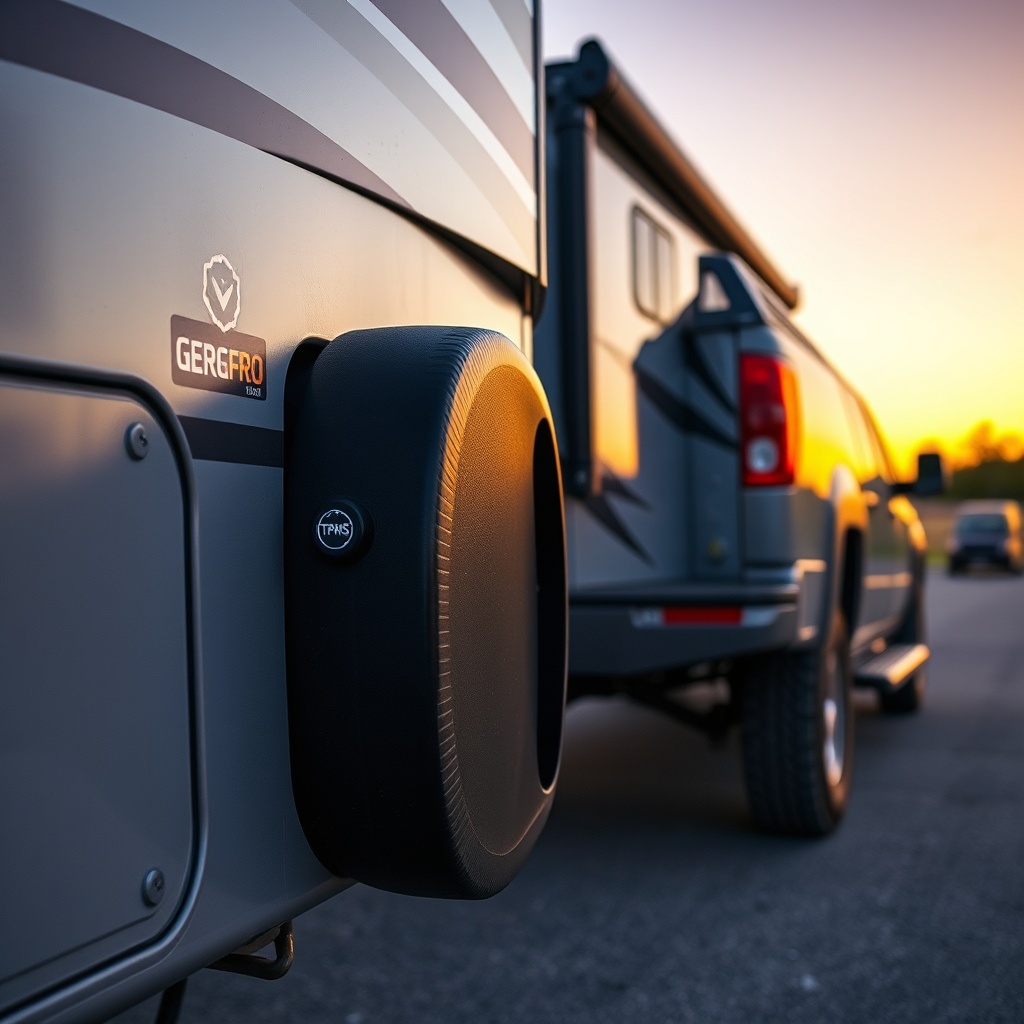
The factory-installed tires on most Geo Pro G16BH units are ST205/75R14 Load Range C, with a maximum cold pressure of 65 PSI. This rating matches the trailer’s gross vehicle weight rating (GVWR) of 3,740 lbs. However, PSI shouldn’t be set blindly—it depends on the actual load you’re carrying. A lightly loaded unit (under 3,000 lbs) can run at 55–60 PSI for a smoother ride, while a fully packed rig needs the full 65 PSI to prevent sidewall flex and overheating.
Temperature swings also affect pressure: for every 10°F drop, tires lose about 1–2 PSI. A quality TPMS with temperature alerts is invaluable here. Always check the sticker on the driver-side front wall of the trailer for the manufacturer’s recommended cold inflation pressures—never exceed the tire sidewall maximum (65 PSI).
Load vs. Pressure Quick Reference
| Total Trailer Weight (lbs) | Recommended Cold PSI (Front/Rear) | Temperature Compensation Zone (°F) |
|---|---|---|
| 2,800–3,200 (light load) | 55–60 | Below 50°F: add 2 PSI |
| 3,200–3,740 (near GVWR) | 65 (full) | Below 50°F: use 65 PSI static |
| Over 3,740 (overloaded—not recommended) | N/A | Reduce weight immediately |
Which TPMS Sensor Type Is Best for the Geo Pro G16BH?
Two main types dominate the tiny trailer market: external clamp-on sensors and internal (in-tire) sensors. For the Geo Pro G16BH, external clamp-on sensors are the preferred choice for most owners. They’re easy to install (no professional mounting needed), work with the standard rubber valve stems, and cost between $80 and £60 (UK users) for a four-sensor kit. Internal sensors, while more tamper-resistant, require wheel disassembly and often cost 50% more.
The G16BH’s 14-inch wheels have limited clearance inside the wheel well, so external sensors with a low profile (like the TireMinder i10 or TST 507) fit without rubbing. Always use metal valve stems if you add external sensors—plastic stems can crack under the sensor’s weight. Brands like EEZ-AES (The Pathfinder system) or the GEMOR TPMS are popular among Geo Pro owners for their reliable signal strength up to 60 feet from the trailer’s axle.
How Many TPMS Sensors Do You Need for a Single-Axle Trailer?
The Geo Pro G16BH is a single-axle trailer with two tires (one per side). A four-sensor system may seem overkill, but many owners buy a four-sensor kit: two for the trailer tires and two for the towing vehicle’s rear tires. This provides a full safety net—especially since a tow vehicle tire failure at highway speeds can cascade into trailer instability. If you’re on a budget, a two-sensor kit covering only the trailer tires is sufficient, but you’ll miss early warnings from the tow rig’s rear tires.
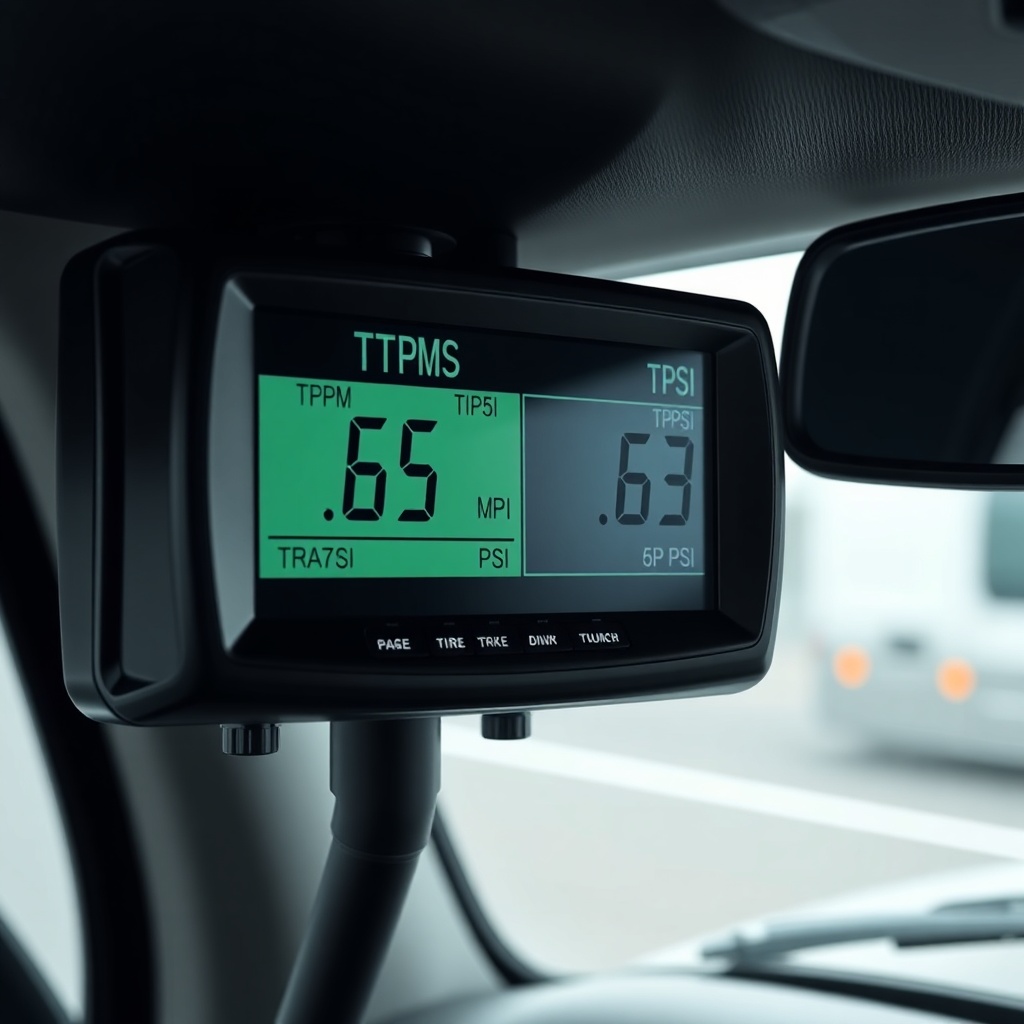
For example, a TST 507 four-sensor kit costs around $220 (£180) in the UK. The system includes a color display that mounts on the dash, adjustable pressure thresholds, and high-temperature alerts. For a single-axle setup, set the low-pressure alarm at 50 PSI and high-pressure at 75 PSI (just above the 65 PSI max). This gives you a 10 PSI buffer for temperature-driven variations.
What Are the Top TPMS Brands for the Forest River Rockwood Geo Pro G16BH?
TireMinder i10 (Minder Research)
The i10 system is a market leader among tiny trailer owners. It supports up to 10 sensors (expandable), has a lightning-fast update interval of 3 seconds, and uses a durable, waterproof transmitter that clips onto the valve stem. Price: $179 (£145) for a four-sensor kit. Owners praise its intuitive LCD display and the ability to set custom PSI and temperature alarms per tire. The TT-400C sensor model works perfectly with 14-inch wheels.
TST 507 (Truck System Technologies)
This is the go-to for many full-time Geo Pro owners. It offers a 5-second update, a daylight-readable color screen, and a flow-through sensor design that allows you to add air without removing the sensor. Price: $220 (£180) for four sensors. The 507’s main advantage: you can replace individual sensors for $40 (£32) instead of buying a whole kit. Signal range of 60 feet covers the trailer’s length easily.
GEMOR TPMS (External Clamp-on)
Budget-friendly and reliable, this system costs about $80 (£65) for a four-sensor kit. It’s less feature-rich (no smartphone integration, basic LCD) but works reliably for short to medium trips. The sensors are small and fit the G16BH’s tight wheel well without scraping. Set your own pressure alarm thresholds during setup—it defaults to 55 PSI low alarm, which may need adjustment for the Geo Pro’s 65 PSI target.
How to Install a TPMS on the Geo Pro G16BH Without Damaging the Valves
Installation is straightforward, but attention to detail prevents future leaks. First, replace any rubber valve stems with metal ones—especially on the trailer tires. The G16BH uses rubber stems from the factory; attach a metal stem (3-inch, 90-degree bend) for $5 each or £4. Twist the sensor on hand-tight, then use the provided spanner for an extra 1/4 turn. Over-tightening can crack the sensor seal.
Position the display unit inside the tow vehicle’s cab—ideally on the dashboard or windshield using the suction cup mount. Run the power cable to a 12V socket. Most TPMS units sync automatically as you install sensors. Walk around the trailer once to confirm each sensor registers. For the Geo Pro G16BH’s single axle, you’ll only need to pair two sensors, but if you added tow-vehicle sensors, assign them correctly (e.g., position 1 for left trailer tire, position 2 for right). A quick test drive at 45 mph confirms signal stability. Check our Forest River Rockwood Geo Pro G16BH: Solar Power Setup Guide for powering your TPMS display with solar.
What Do Geo Pro G16BH Owners Say About Their TPMS?
Owners on RV forums and Facebook groups consistently mention peace of mind as the biggest benefit. One full-timer noted, “I had a slow leak from a nail in a tire near Taos, New Mexico—the TPMS alerted me at 42 PSI before I even noticed a wobble. Saved a blowout.” Many appreciate the temperature monitoring feature: a 20°F rise in tire temperature under load warns of impending failure.
On the cost side, users emphasize value over price. “I spent $220 on a TST 507, and after two years, it still works flawlessly. I’ve replaced two sensors for less than $80 total,” shared a Geo Pro owner from Colorado. Some owners of the smaller model (G16BH is 19 feet long) prefer the TireMinder i10 for its simpler setup and smaller display footprint on the dashboard. A few complain about false alarms during very hot days (above 100°F), but most systems let you adjust the temperature threshold to 120°F to reduce nuisance warnings.
A recurring tip: hardwire the display to a switched 12V circuit if you use the trailer’s battery for power, or use a USB adapter in the truck. The factory battery on the G16BH is a group 24 deep-cycle, which can run a TPMS display for weeks. For kitchen gadget space planning, see our Forest River Rockwood Geo Pro G16BH: Top Space-Saving Kitchen Gadgets.
Frequently Asked Questions
1. Can I use a TPMS on the Geo Pro G16BH if I have aftermarket aluminum wheels?
Yes. Most external TPMS sensors fit standard valve stems regardless of material. If your aftermarket wheels have recessed valve stems, use a 90-degree metal valve stem extension (1–2 inches long) to avoid stem breakage under the sensor’s weight. The default ST205/75R14 wheels have a standard valve hole, so no adapter is needed unless you upgraded wheels.
2. Does the Geo Pro G16BH’s solar battery charge system affect TPMS sensors?
No. TPMS sensors operate on their own lithium coin cells (CR1632 or CR2032, depending on brand) and are independent of the trailer’s electrical system. The display unit powers from the tow vehicle’s 12V port or USB. The built-in Go Power! solar system on the G16BH charges the house battery for lights and appliances, not the TPMS. Visit our Forest River Rockwood Geo Pro G16BH: Compact Washer-Dryer Options for Tiny Living if you’re interested in DC-loaded appliances.
3. How long do TPMS sensor batteries last on a Geo Pro G16BH?
Most external sensor batteries last 1–3 years, depending on temperature extremes and duty cycle. The TST 507 sensors use CR1632 batteries that last about 18 months in moderate climates; TireMinder i10 sensors last up to 24 months using CR2032 cells. If you store the trailer in winter, remove sensors from valve stems to conserve battery and prevent corrosion. Replace batteries when the display shows low battery symbols per sensor.
4. What pressure range should I set for the Geo Pro G16BH’s spare tire?
The spare tire (typically a matching ST205/75R14) should be inflated to the maximum cold pressure listed on its sidewall—usually 65 PSI. Since the spare is rarely used, a TPMS sensor is not essential for it, but if your kit supports a fifth sensor, install one. If not, manually check the spare’s pressure monthly with a gauge. Store the spare under the trailer in the designated bracket; temperatures under the underbelly can fluctuate rapidly.
5. Will a TPMS work if I upgrade to a larger tire size (e.g., 15-inch) on the Geo Pro G16BH?
Yes, but you must recalibrate the TPMS display to the new tire’s recommended PSI. Most systems allow you to set individual thresholds per sensor. For a 15-inch wheel (common upgrade to handle heavier loads), the recommended cold pressure may drop to 50–58 PSI depending on the tire’s load range. Always check the new tire’s sidewall and adjust your alarms accordingly. For off-grid electric updates, read our Forest River Rockwood Geo Pro G16BH: Compact Water Heater Options for Tiny Living.
6. Can I leave TPMS sensors on during winter storage?
It’s not recommended. Extreme cold (below 0°F) can drain sensor batteries faster and cause rubber valve stems (if not replaced) to crack. Remove all sensors and store them in a warm, dry place (like the trailer’s interior cabinet). Reinstall them in spring. If you use flow-through sensors (like TST 507), you can leave them off and simply reattach before your first trip—no special tools needed.