
What Makes Tumbleweed’s Custom Build Approach Different for Insulation?
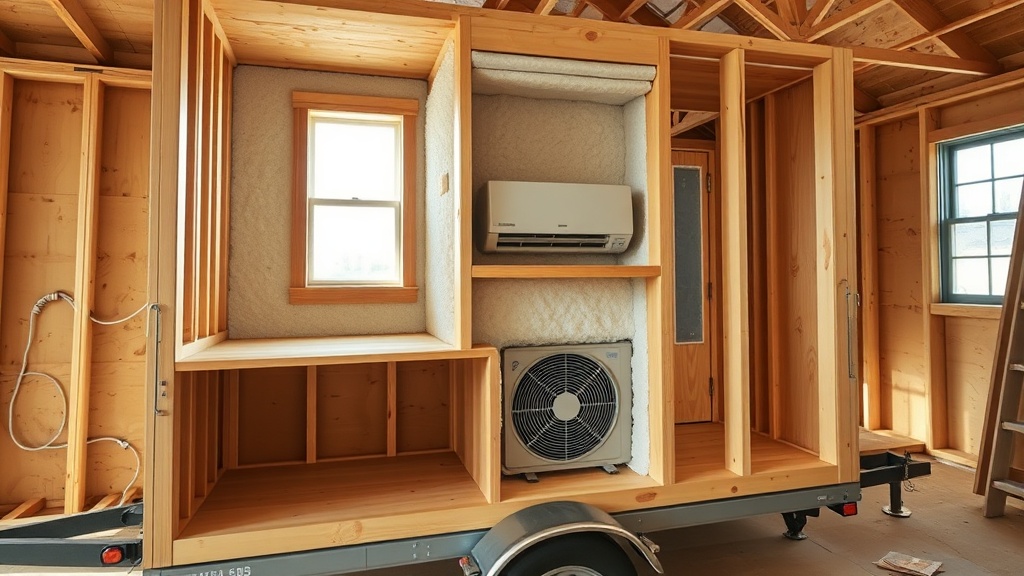
When you commission a Tiny House Custom Build by Tumbleweed, the insulation isn’t an afterthought—it’s baked into the structural envelope from the framing stage. Unlike DIY kits or off-the-shelf park models, Tumbleweed’s team works with you to select materials that match your climate zone, budget, and interior square footage goals. Their standard framing uses 2×4 studs on 24-inch centers, which leaves limited cavity depth, so the choice between closed-cell spray foam, rock wool batts, or rigid board becomes a core design decision rather than a last-minute swap.
For a 20-foot Tumbleweed model, the total wall area is roughly 320 square feet—every inch of R-value counts. The custom build process lets you prioritize either maximum thermal performance (for four-season living) or a lighter, more budget-friendly setup (for warmer-weather use). Below, we break down the best options Tumbleweed offers and exactly how they perform in real-world tiny houses.
Which Insulation Type Gives the Highest R-Value in a Tumbleweed Wall Cavity?
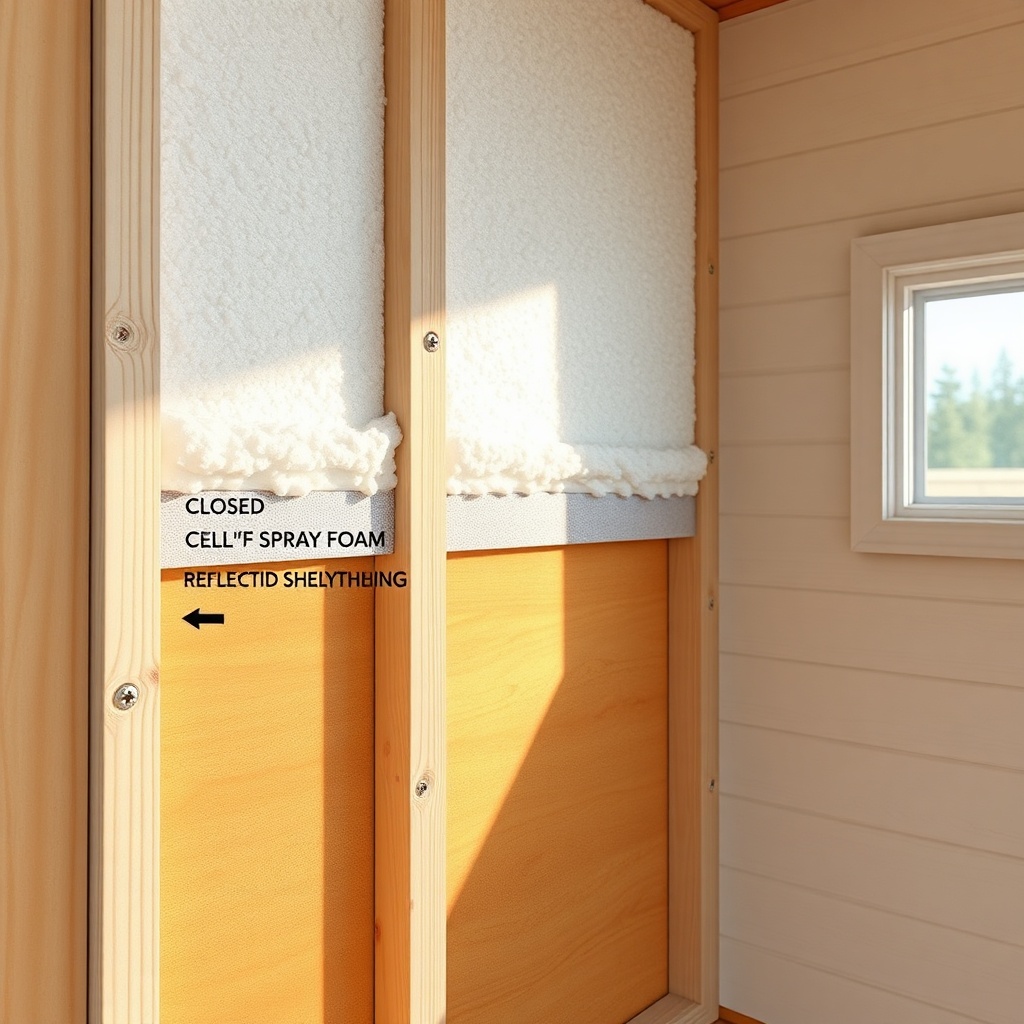
In a 3.5-inch deep 2×4 wall, the maximum theoretical R-value you can achieve is limited by the material’s thermal resistance per inch. Tumbleweed’s go-to for maximum performance is closed-cell spray polyurethane foam (SPF). At roughly R-6.5 per inch, a full 3.5-inch fill yields about R-22.75. That’s nearly double the R-13 you’d get from fiberglass batts in the same cavity.
However, closed-cell foam is also an air barrier and vapor retarder, which is critical in a tiny house where every square foot of interior space is adjacent to an exterior wall. The downside? Cost. A 20-foot Tumbleweed with a 8.5-foot ceiling requires about 300 board feet of wall cavity spray foam. At £3.50–£4.50 per board foot installed, that’s around £1,050–£1,350 for the walls alone. Open-cell foam (R-3.5 per inch) is cheaper but doesn’t provide the same vapor control or structural stiffening.
If you’re building for a hot climate where cooling dominates, Tumbleweed often recommends a hybrid approach: 2 inches of closed-cell foam (R-13) followed by 1.5 inches of open-cell (R-5.25) to save money while still achieving R-18+.
| Insulation Material | R-Value per Inch | Typical Cost (per board foot, installed) | Best Use Case |
|---|---|---|---|
| Closed-cell spray foam | R-6.5 | £3.50–£4.50 | Four-season, high humidity, cold climates |
| Open-cell spray foam | R-3.5 | £1.50–£2.50 | Moderate climates, budget-conscious builds |
| Rock wool (mineral wool) batt | R-4.2 | £1.20–£1.80 | Fire resistance, soundproofing, DIY-friendly |
| Fiberglass batt | R-3.5 | £0.60–£1.00 | Lowest cost, but requires careful sealing |
| Rigid foam board (polyiso) | R-6.0 | £2.00–£3.50 | Exterior continuous insulation, roof decks |
Should You Prioritise Continuous Exterior Insulation Over Cavity Fill?
Tumbleweed’s standard framing doesn’t include a dedicated exterior insulation layer, but they can add it as a custom upgrade. Adding 1 inch of rigid polyiso board (R-6) to the outside of the sheathing, then furring strips, then siding creates a thermal break that stops conductive heat loss through the studs. This is especially valuable in tiny houses because the wall-to-floor ratio is high—every stud acts as a thermal bridge in a standard cavity-fill approach.
The trade-off: exterior insulation reduces interior width by about 2 inches total (1 inch per side). On an 8.5-foot-wide Tumbleweed, that’s negligible. But installation requires careful detailing around windows and doors, which adds labour cost—roughly £400–£700 extra on a 20-foot build. For clients building in USDA zones 5 and colder (e.g., Colorado, Maine, Canada), Tumbleweed’s project managers almost always recommend this upgrade. In milder zones 7–9, cavity-only spray foam is typically sufficient.
How Do You Handle the Floor and Roof Insulation in a Tumbleweed?
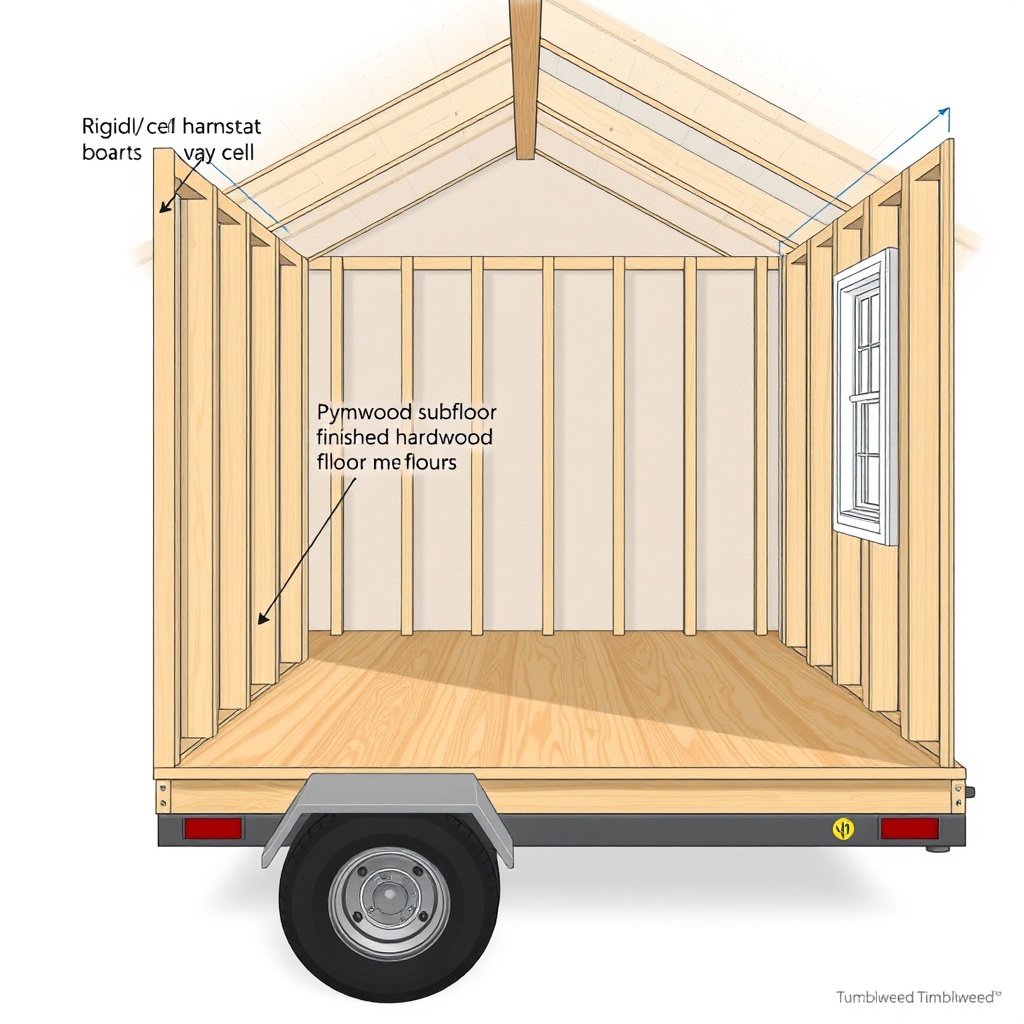
The floor and roof are where tiny houses lose the most heat after walls. In a Tumbleweed custom build, the floor cavity is typically 2×6 (5.5 inches deep) to accommodate trailer cross-members. Closed-cell foam here gives R-35.75—overkill for most climates, but excellent for cold feet. A more common Tumbleweed recommendation is 3 inches of closed-cell foam (R-19.5) plus 2.5 inches of rigid foam board between the joists (R-15), for a combined R-value around 34.5.
The roof is trickier. Tumbleweed builds a “hot roof” design with the insulation directly under the metal roofing, no attic venting. This prevents condensation in the tight cavity. Standard spec is 4 inches of closed-cell foam (R-26), though in snow-heavy regions they’ll go to 6 inches (R-39) by building up the roof rafters. Cost for roof foam on a 20-foot Tumbleweed: £1,200–£1,600 for R-26, or £1,800–£2,400 for R-39.
Don’t forget the underbelly. The wheel well area is notoriously hard to insulate. Tumbleweed uses a combination of spray foam and a rigid foam block that’s cut to fit around the wheel well, sealed with butyl tape. Expect an extra £150–£300 for this detail.
What Are the Fire and Moisture Risks with Spray Foam in a Tiny House?
Spray foam is the most common insulation in Tumbleweed builds, but it’s not without trade-offs. Closed-cell foam is a vapour barrier, which means any moisture trapped inside the wall cavity (from leaks or humidity) can’t dry outward. In a tiny house, you’re living right next to those walls—cooking, showering, breathing. If the building envelope isn’t perfectly sealed, moisture can get trapped between the foam and the interior sheathing, leading to rot.
Tumbleweed addresses this by specifying a “drying potential” detail: they install a smart vapour retarder (like MemBrain) on the interior side of the foam in cold climates, allowing the wall to dry inward during winter. In warm-humid climates, they use a Class II vapour retarder (painted drywall) and avoid closed-cell foam for the roof deck.
Fire-wise, spray foam is a plastic. Tumbleweed’s standard foam is treated with flame retardants and covered with a 15-minute thermal barrier (½-inch drywall) as required by code. However, in a tiny house, you have less than 200 square feet of floor area—if a fire starts in the wall, you’re out the door quickly. Many owners choose rock wool batts instead for peace of mind, as rock wool is non-combustible up to 1,400°F. Rock wool costs about 25% more than fiberglass but is similar in price to open-cell foam per square foot.
What Do Tumbleweed Owners Say About Insulation Performance?
Owner feedback on Tumbleweed’s insulation options falls into a few clear patterns. First, those who chose closed-cell spray foam for both walls and roof consistently report that their tiny house stays comfortable in outdoor temperatures from -10°F to 100°F, with no drafts and minimal reliance on the built-in mini-split heat pump. One owner in upstate New York noted their electric bill never exceeded £45 per month, even during a January cold snap.
Second, owners who went with fiberglass batts to save money often regret it after two years. They report cold spots near windows and doors, and a persistent musty smell from condensation in the walls. A few have had to retrofit spray foam—a messy and expensive job in a finished tiny house.
Third, the roof insulation is where most owners wish they had spent more. Even those with R-26 foam in the roof say the loft can feel stifling in summer without a secondary radiant barrier. A reflective foil installed under the metal roofing (about £150 extra) makes a noticeable difference in peak summer heat.
Frequently Asked Questions
Can I use sheep’s wool insulation in a Tumbleweed custom build?
Yes, Tumbleweed will work with you to install sheep’s wool batts (R-3.5 per inch) in walls and roof, but it’s not a standard option. Sheep’s wool is vapour-permeable, which is excellent for moisture regulation, but it sags over time in vertical cavities if not properly supported. You’ll need a vapour barrier on the interior side in cold climates, and the cost is roughly double that of rock wool—around £2.50–£3.50 per square foot installed.
How long does spray foam last before needing replacement?
Closed-cell spray foam, when properly installed and protected from UV light, has an indefinite lifespan—30+ years with no significant degradation in R-value. Tumbleweed uses a high-density formulation (2.0 lb/ft³) that resists settling. The only common failure point is if the house moves on the trailer, cracking the foam; a reputable installer will use a two-part system that flexes with minor trailer flex.
Is it worth insulating the interior partition walls?
In a Tumbleweed, interior walls are typically 2×3 framing with no insulation. Adding R-10 rock wool batts between the bathroom and living area can reduce noise from the composting toilet and shower. Cost is minimal—about £50–£80 in materials for a 20-foot build—and many owners recommend it for peace and quiet.
What’s the best insulation for a Tumbleweed built in a hot-humid climate (e.g., Florida)?
For hot-humid zones (USDA zone 9 and above), Tumbleweed recommends open-cell spray foam (R-3.5 per inch) combined with an exterior rigid foam drainage plane. The open-cell foam allows incidental moisture to dry inward, while the exterior foam provides a thermal break. Do not use closed-cell foam on the roof deck—it can trap moisture above the foam, leading to roof sheathing rot. Consider also adding a radiant barrier under the metal roof to reflect solar heat.
How much does insulation add to the total custom build cost?
On a typical 20-foot Tumbleweed, the base insulation package (fiberglass batts in walls, R-13) adds about £600–£800 to the build cost. Upgrading to closed-cell spray foam everywhere (walls, floor, roof) adds £2,500–£3,500. Adding exterior rigid foam and radiant barrier adds another £600–£1,200. The total cost of the custom build (including labour and materials) starts around £45,000–£55,000 for a basic shell, so insulation is roughly 5–8% of the total.
Does Tumbleweed offer a ‘climate zone’ checklist for insulation?
Yes, Tumbleweed provides a detailed insulation recommendation sheet based on your ZIP code and local building codes. Their project managers will review the average heating and cooling degree days for your location and suggest a tiered approach. For example, a build in northern Minnesota (zone 6) gets a mandatory closed-cell foam specification, while a build in southern Arizona (zone 3) can use R-13 batts with a radiant barrier. Request this during your initial design consultation.