Why Does the Coachmen Beyond 22RB Need a Dedicated Propane Hookup Guide?
Cold-weather camping in a Coachmen Beyond 22RB demands precise propane management. A properly set up winter propane hookup keeps the furnace running, prevents frozen pipes, and ensures the cooktop works without interruption. This guide covers the specific propane connections, tank monitoring, and winterization steps unique to the 22RB model.
What Propane Tank Setup Does the Coachmen Beyond 22RB Use?
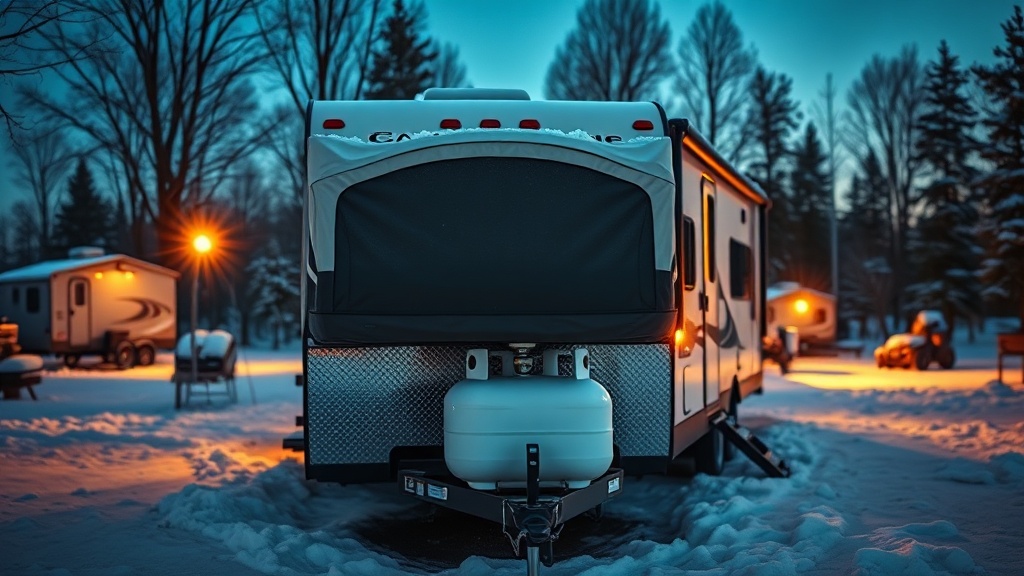
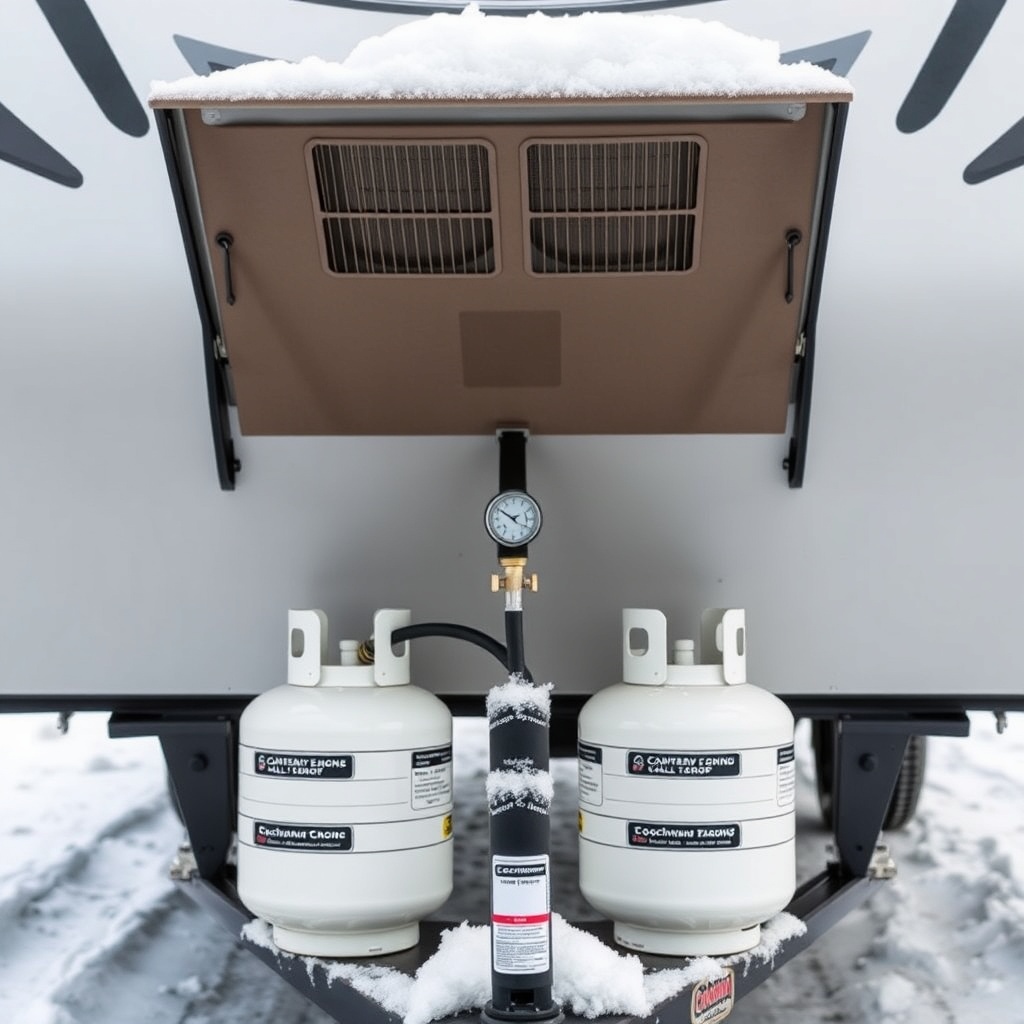
The Coachmen Beyond 22RB comes standard with two 20-pound propane tanks mounted on the front A-frame, protected by a rigid cover. These tanks connect to a two-stage auto-changeover regulator, which automatically switches to the reserve tank when the primary tank empties. This design is critical for winter use, as it prevents sudden furnace shutdowns during overnight low temperatures. The regulator is compatible with standard OPD (Overfill Prevention Device) valves, and the hoses are pre-routed to the furnace, water heater, stove, and optional refrigerator.
For winter operation, owners should verify that the tank cover has adequate ventilation to prevent ice buildup on the regulator vent. A blocked vent can cause erratic pressure, leading to weak furnace ignition. Checking the regulator’s weep hole for frost or debris before each trip is a simple but essential step.
How Do You Connect a Propane Line in Sub-Freezing Temperatures?
Attaching a propane hose or external appliance in freezing conditions requires extra care. The standard quick-connect fitting on the 22RB’s exterior, located near the passenger-side rear, is a brass ACME-style connector rated for outdoor use. When the temperature drops below 10°F (-12°C), the rubber O-ring inside the coupler can become stiff, making it difficult to achieve a proper seal. To avoid leaks, warm the connector with a hair dryer or store the hose inside the RV until use.
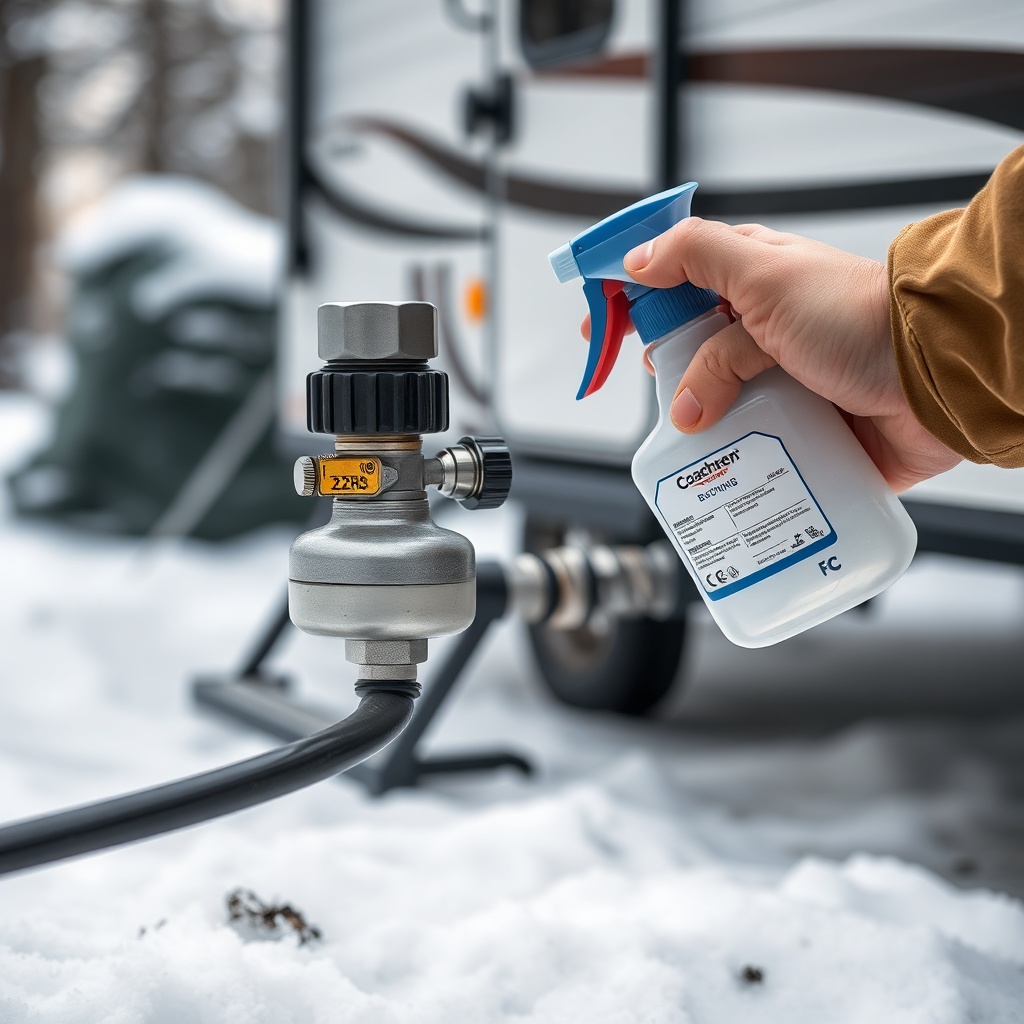
For auxiliary propane hookups, such as a portable heater or stove, always use a 12-inch hose whip rated for extreme cold. The hose should have a protective jacket to prevent cracking. After connecting, apply a leak-detection spray (a mixture of 50% water and 50% dish soap) to all joints. Bubbles indicate a leak that must be tightened or replaced immediately. Never use a flame for leak detection—this is an absolute rule in winter conditions.
If connecting a propane tank for a barbecue or fire pit, ensure the quick-connect port is free of snow and ice. A dedicated adapter, available at most RV supply stores, converts the standard fitting to a 1-inch ACME male for bulk tanks.
What Are the Recommended Winter Propane Usage Rates for the 22RB?
Knowing propane consumption helps owners plan refill intervals during extended cold-weather stays. The 22RB’s furnace, a Suburban NT-20SE (20,000 BTU), is the primary consumer. Below is a realistic estimate based on a 30°F (-1°C) nighttime low with the thermostat set at 60°F (15°C).
| Appliance | BTU Rating | Estimated Daily Usage (Propane Pounds) |
|---|---|---|
| Furnace (continuous run) | 20,000 | 4–6 lbs |
| Water Heater (6-gal tank, 2 showers) | 12,000 | 1–2 lbs |
| Cooktop (2 burners, 30 min total) | 7,000 per burner | 0.5–1 lb |
| Refrigerator (optional propane mode) | 1,500 | 0.3–0.5 lb |
| Total Daily (Winter) | 6–9.5 lbs |
At these rates, a single 20-pound tank lasts roughly 2 to 3 days in winter. With two tanks, an owner can expect 4 to 6 days of continuous heating before needing a refill. Monitoring the gauge on the auto-changeover regulator’s window—which shows green when full and red when empty—helps avoid surprises. For longer off-grid stays, consider pairing propane usage with a portable solar setup, as detailed in the Coachmen Beyond 22RB: Portable Solar Panels Guide to reduce furnace dependency during daylight hours.
How Do You Winterize the Propane System in the 22RB?
Winterizing the propane system itself is straightforward, but it goes beyond just filling tanks. The regulator, hoses, and valves must be protected from moisture ingress. Start by closing both tank valves. Disconnect the hoses at the regulator, not the tank, to prevent valve damage. Inspect each hose for cracks, particularly near the brass fittings. Replace any hose showing UV damage or stiffness.
Next, lubricate the tank valve threads and regulator connection with a silicone-based grease. This prevents corrosion and ensures a smooth reconnection in spring. Store the hoses indoors if the RV will be idle for more than two weeks below 0°F (-18°C). The auto-changeover regulator itself does not need draining, but its vent must remain clear. Use a zip-tie to secure a small plastic cup over the vent (with a hole for airflow) to block snow accumulation.
For the furnace and water heater, no additional propane system winterization is needed if they are used regularly. However, if the RV will be unheated for a month or more, close the propane tank valves and run the furnace for 10 minutes to burn off residual gas in the lines. This prevents condensation inside the pipes.
Owners should also consider insulating the propane line run under the 22RB’s frame. A foam pipe wrap (R-3 rating) applied to the ½-inch copper line between the tanks and the water heater reduces heat loss and keeps gas flowing smoothly. This is covered in more depth in the Coachmen Beyond 22RB: Compact Window Insulation Guide, which addresses overall thermal envelope maintenance.
What Safety Checks Are Critical Before a Winter Camping Trip?
Before leaving for a cold-weather destination, perform these five checks on the Coachmen Beyond 22RB propane system:
- Regulator function test: Open both tank valves slowly. Listen for the click of the auto-changeover valve. If you hear hissing, the valve is stuck due to ice—warm it with a heat gun on low setting.
- Leak test all fittings: Use the soapy water method on every connection from tank to appliance. Pay special attention to the exterior quick-connect port and furnace supply line.
- Ensure tank cover is secure: The cover must be latched tightly but leave a 1-inch gap at the bottom for ventilation. Snow should not block this gap.
- Verify furnace exhaust vent clearance: The furnace vent on the 22RB is located on the driver-side rear. Ensure it is free of snow, ice, or leaves. A blocked vent can cause carbon monoxide backup.
- Test propane detectors: The 22RB has a propane detector inside, near the floor, and a carbon monoxide detector in the bedroom. Press the test button. Replace batteries if older than six months.
Owners should also keep a spare 20-pound tank inside a ventilated storage compartment for emergencies. Never store propane tanks inside the living area—this is a fire and explosion hazard. For fridge replacements or upgrades, consult the Coachmen Beyond 22RB: Best Compact Dishwasher Options for Tiny Kitchens for propane-compatible appliance ideas.
What Owners Say About Propane in the Coachmen Beyond 22RB
Long-term owners and winter campers frequently share practical tips about the 22RB’s propane system. Many praise the auto-changeover regulator for its reliability in sub-zero conditions, though some note that the tank cover’s hinges can freeze shut. One owner from Minnesota recommends spraying the cover hinges with silicone lubricant before each trip. Another common suggestion is to upgrade the standard propane hoses to reinforced rubber hoses rated for -40°F (-40°C), as the stock hoses may stiffen below 0°F.
Several owners highlight the importance of monitoring propane usage with a digital scale. A simple portable scale placed under the tank between use provides an accurate reading of remaining fuel, which is more reliable than the built-in gauge that can be inaccurate in cold weather. Those who boondock extensively recommend pairing propane with a solar array, as covered in the Coachmen Beyond 22RB: Portable Solar Panels Guide, to run electric space heaters during sunny afternoons and conserve propane for overnight furnace use.
A frequent complaint involves the exterior quick-connect port’s location. It is mounted low on the rear passenger-side, near the bumper, making it prone to snow burial. Owners suggest installing a protective 4-inch PVC pipe guard around the port to keep it clear. Some also note that the port’s brass fitting can corrode if not capped when unused—a simple rubber cap solves this.
Frequently Asked Questions
Can I use a single 20-pound tank in winter?
Yes, but the furnace will deplete it in 2–3 days. The auto-changeover regulator is designed for two tanks, so using one tank bypasses the reserve feature. For trips longer than a weekend, keep both tanks filled and connected.
How do I thaw a frozen propane regulator on the 22RB?
Never use an open flame. Pour warm (not boiling) water over the regulator and connections, or use a hair dryer on low heat. Once thawed, check for leaks. If it freezes again, the vent may be blocked—clear debris and wrap the regulator in an insulated cover.
Can I run the furnace on a single 20-pound tank at 10°F?
Yes, but fuel consumption rises to approximately 6 pounds per 24-hour period at that temperature (assuming thermostat set at 60°F). A single tank lasts roughly 3 days. For safety, always start with both tanks full and use the auto-changeover feature.
Is the 22RB’s propane system compatible with the lithium battery upgrades?
Yes, the propane system is independent of the 12V electrical system. Upgrading to lithium batteries for LED lighting, water pump, and fridge does not affect propane operation. However, a loaded propane system still requires the 12V furnace fan, which may draw down batteries faster in cold weather.
How often should I replace propane hoses on the 22RB?
Manufacturers recommend replacing rubber hoses every 5 years, or sooner if cracks, stiffness, or swelling appear. Steel braided hoses can last 10 years but should be inspected annually for corrosion. Always replace hoses after any propane leak incident.
Do I need a special regulator for high-elevation winter camping?
Standard propane regulators work up to 10,000 feet (3,048 meters) elevation. Above this, propane combustion efficiency drops. The 22RB’s regulator is rated for standard use; for high-altitude camping, consult a propane professional and consider an adjustable regulator with a high-altitude kit.