Tumbleweed Custom Build: Best Compact Refrigerator Options for Tiny Houses
When designing a Tumbleweed Custom Build, the kitchen is the heart of the home, and selecting the right compact refrigerator is a critical decision that balances space, energy efficiency, and practicality. With limited square footage, every cubic inch matters, and a standard refrigerator simply won’t cut it. This article dives into the best compact refrigerator options for your Tumbleweed tiny house, focusing on the kitchen-cooking aspect to ensure you preserve fresh ingredients without sacrificing precious counter or floor space.
From under-counter models to mini-fridges with freezer compartments, we evaluate key features like capacity, power consumption, and dimensions tailored to Tumbleweed’s custom floor plans. Whether you’re a full-time cook or a minimalist, these options integrate seamlessly with your tiny home lifestyle, especially when paired with smart insulation strategies like those covered in Tumbleweed Custom Build: Best Insulation Options for Tiny Houses.
What Is the Ideal Capacity for a Tiny House Refrigerator?
The ideal capacity for a tiny house refrigerator typically ranges from 3 to 6 cubic feet, depending on household size and cooking habits. For a solo dweller or couple, a 4.5 cu. ft. model offers sufficient storage for fresh produce, dairy, and frozen items without overwhelming the kitchen footprint. Tumbleweed’s designs, such as the “Bungalow” or “Linden,” have dedicated spaces for under-counter units, making 24-inch wide models a popular choice.
Larger families might consider a 6 cu. ft. fridge, but be mindful of weight distribution and access. In a Tumbleweed Custom Build, every inch counts, so prioritize a unit that fits below the counter or integrates into a kitchen island. Popular brands like Smad, Avanti, and Danby offer models specifically engineered for RVs and tiny homes, with energy-efficient compressors that minimize battery drain.
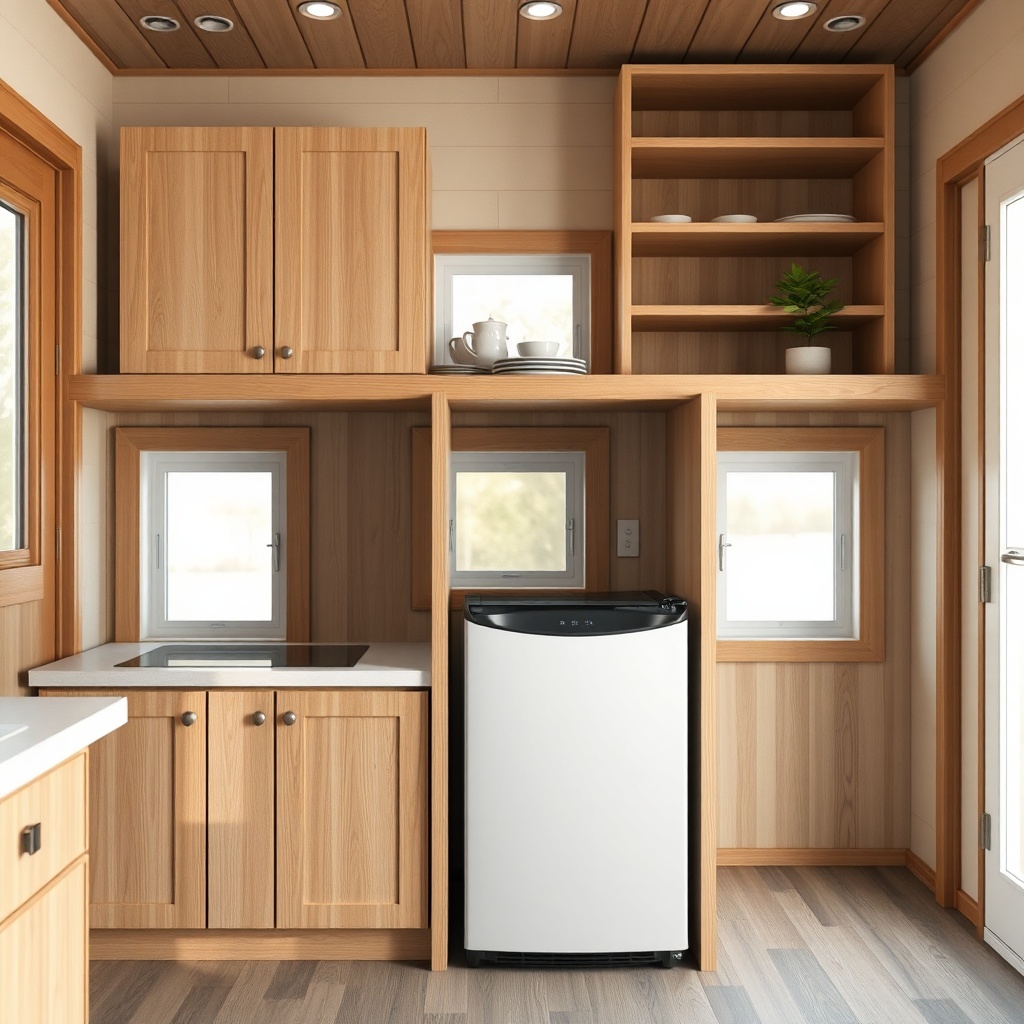
What Are the Best Under-Counter Refrigerator Models for Tumbleweed?
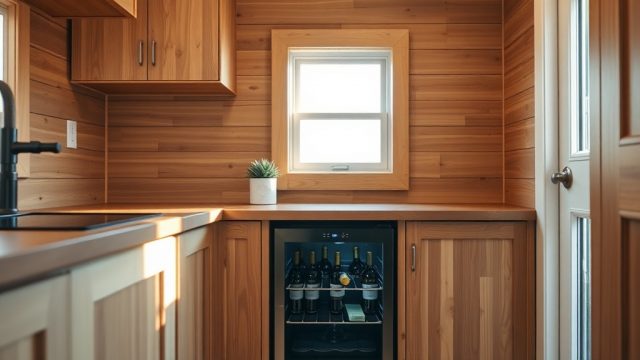
Under-counter refrigerators are a game-changer for tiny house kitchens, freeing up overhead space for open shelving or Tumbleweed Custom Build: Vertical Garden Ideas for Tiny Spaces. Here are the top models that fit perfectly into standard 24-inch cutouts:
- Smad 24-inch Stainless Steel Refrigerator (4.5 cu. ft.): At $499 USD, this unit features a reversible door, adjustable thermostat, and a small freezer compartment (about 0.5 cu. ft.). Its shallow depth (20 inches) allows easy cabinetry integration.
- Avanti Compact Refrigerator (4.5 cu. ft.): Priced at $425 USD, it offers a separate freezer door, LED lighting, and a manual defrost system. Dimensions are 24”W x 20”D x 32”H, fitting most Tumbleweed base cabinets.
- Danby Designer (4.4 cu. ft.): Costs $450 USD and includes a mechanical thermostat, energy-star certification, and a slide-out shelf for easy cleaning. It’s whisper-quiet at just 38 decibels.
These models balance storage with energy consumption (typically 120–150 kWh/year), crucial for off-grid setups. A table below compares key specs for quick reference.
| Model | Capacity (cu. ft.) | Price (USD) | Energy Use (kWh/yr) | Noise Level (dB) |
|---|---|---|---|---|
| Smad 24-inch | 4.5 | $499 | 130 | 40 |
| Avanti Compact | 4.5 | $425 | 145 | 42 |
| Danby Designer | 4.4 | $450 | 125 | 38 |
| Vissani 24-inch | 4.3 | $380 | 150 | 44 |
How Important Is Energy Efficiency for Off-Grid Tumbleweed Homes?
For Tumbleweed Custom Builds that rely on solar panels or battery banks, energy efficiency is paramount. Compact refrigerators with inverter compressors use 10–20% less power than conventional models, making them ideal for off-grid living. Look for units with Energy Star certification, which garanties lower consumption (typically under 150 kWh/year). For example, the Danby Designer model above uses only 125 kWh annually, equivalent to running a single light bulb for hours each day.
Another factor is DC-powered refrigerators, which convert solar energy directly without an inverter. Brands like NovaKool offer 12V/24V models (e.g., 4.0 cu. ft., $1,200 USD) specifically for tiny houses, but they come at a premium. However, for full-time cooking and weekly grocery shopping, these units preserve food efficiently without draining your batteries. Pair your fridge with proper insulation using the tips from Tumbleweed Custom Build: Best Insulation Options for Tiny Houses to reduce indoor temperature fluctuations.
For those on a budget, AC-powered models like the Avanti can be paired with a small inverter, but expect a 10% efficiency loss. Small sacrifices in upfront cost lead to long-term savings, especially if you prioritize a 7-day thermostat safety backup to prevent food spoilage during cloudier days.
What Space-Saving Features Should I Look For in a Tiny House Fridge?
Space-saving features go beyond dimensions. When evaluating compact refrigerators for a Tumbleweed kitchen, prioritize the following:
- Reversible doors: Allows the fridge to open left or right, adapting to your layout. This is critical when placed near walls or corners.
- Freezer compartment: A small (0.5 cu. ft.) freezer for ice or frozen vegetables is a luxury. Some models like the Smad have a pull-out drawer, while others have a separate door.
- Adjustable shelves: Glass or wire shelves that can be repositioned to accommodate tall bottles or bulk produce.
- Counter-depth design: Typically 24 inches deep, these fridges align with standard countertops, creating a seamless look.
- Built-in ventilation: Under-counter models require front-facing air vents to avoid overheating, so choose models with proper specifications.
Another clever hack is to place the fridge under a counter near a window, maximizing airflow and reducing heat buildup. This works particularly well when you integrate space-saving loft ladders for easier access to sleeping areas, as outlined in Tumbleweed Custom Build: Best Space-Saving Loft Ladders for Tiny Houses. The synergy between kitchen layout and vertical movement in a tiny home can’t be overstated.
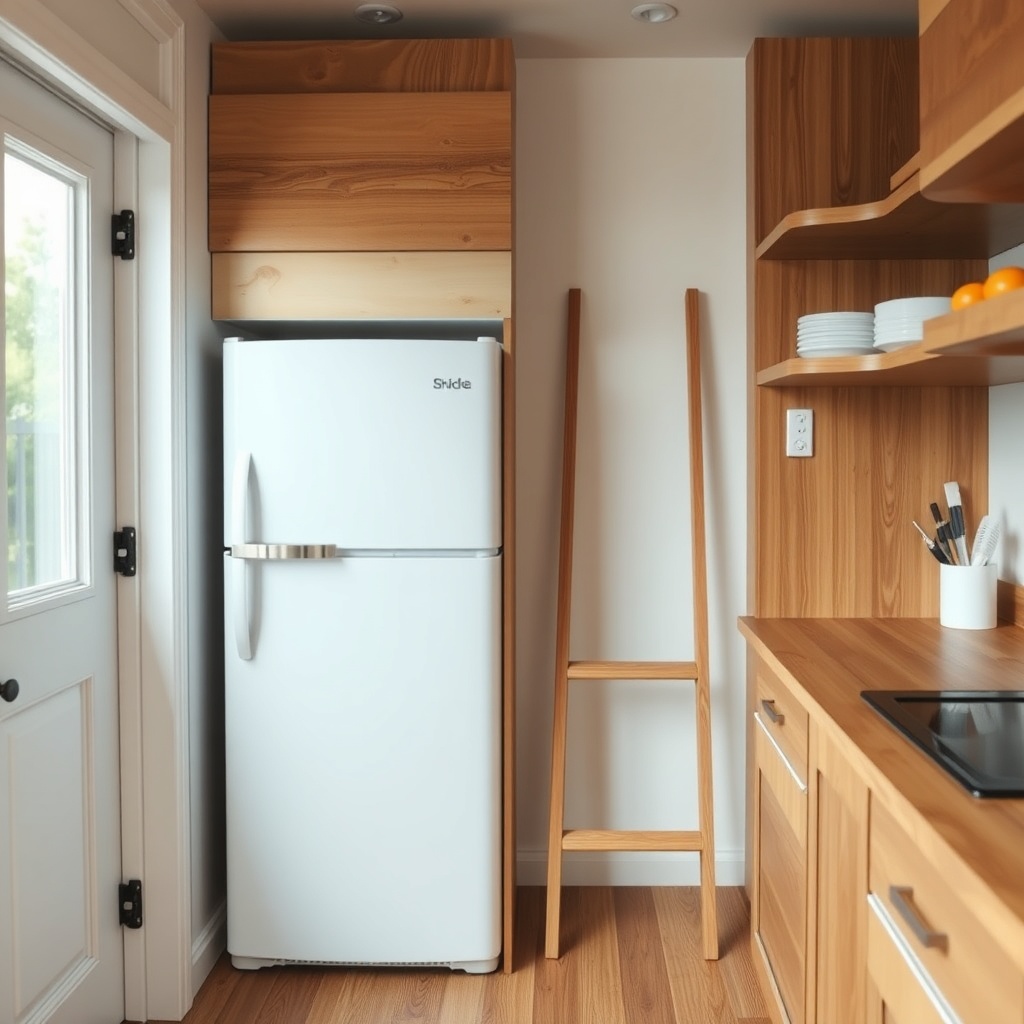
How Do I Install a Compact Refrigerator in a Tumbleweed Custom Build?
Installation of a compact fridge in a Tumbleweed involves careful planning for ventilation, leveling, and electrical access. Follow these steps for a smooth setup:
- Measure twice, cut once: Ensure the cutout in your base cabinet is at least 24”W x 24”D x 34”H to accommodate most under-counter models. Leave a 1-inch gap on all sides for airflow.
- Ventilation: Most compact fridges require at least a 2-inch gap at the back and a 1-inch gap on the sides. Some models (like the Danby) have front-venting, allowing flush installation against the back wall. Check the manual.
- Level the unit: Use a level to avoid door misalignment. Most models have adjustable legs; twist them until the fridge sits firmly.
- Electrical connection: Wire a dedicated 15-amp circuit to the fridge’s location. For off-grid systems, ensure your inverter can handle the startup surge (which is 2-3x the running power).
Selecting the right location also affects kitchen workflow. Avoid situating the fridge next to an oven to prevent heat transfer, which makes the compressor work harder. After installation, check for any rattles or condensation. For added shelving near the fridge, consider Tumbleweed Custom Build: Top Bathroom Storage Hacks for Tiny Houses, which often includes multi-functional furniture ideas that work in kitchens too.
What Owners Say
Owners of Tumbleweed Custom Builds consistently emphasize the transformative impact of a well-chosen compact refrigerator. Sarah from Oregon writes: “We went with the Smad 24-inch model, and it fits perfectly under our butcher block counter. The reversible door was a lifesaver because our kitchen is narrow. It’s so quiet that we forget it’s running. Only downside is the tiny freezer–just enough for a couple of ice packs.”
Mike from Colorado, who lives off-grid with a 200W solar setup, shares: “We opted for the Danby Designer because of the Energy Star rating. It draws less than 100W, and even on cloudy days, our battery bank handles it with ease. We added a small behind-the-fridge insulation panel to reduce thermal loss. Highly recommend matching it with good roof insulation.”
Jane from Maine highlights space integration: “Our Tumbleweed “Linden” model came with a custom cabinet for a 24-inch fridge. We used the space above for a microwave, which freed up counter space. The key was measuring the depth–our old fridge stuck out, but this one is flush. Just make sure to check ventilation specs before committing.”
Common feedback includes the importance of checking door swing clearance, especially in tight layouts. Many owners also recommend buying a model with an interior light, as tiny house kitchens often lack overhead fixtures. For extra storage, some combine their fridge with a fold-down counter attached to a wall using brackets from Tumbleweed Custom Build: Vertical Garden Ideas for Tiny Spaces.
Frequently Asked Questions
1. Can I use a standard RV refrigerator in a Tumbleweed tiny house?
Yes, RV refrigerators (like Dometic or Norcold) are designed for mobile applications and run on propane or 12V power. However, they tend to be less energy-efficient than compact home models and may require additional ventilation. For stationary tiny houses, a compact home refrigerator is often more reliable and easier to source repairs for.
2. How much does a compact refrigerator cost for a tiny house?
Prices vary from $250 USD for basic mini-fridges to over $1,200 USD for high-end models with freezer compartments and inverter compressors. Mid-range units like the Smad ($499 USD) offer the best balance of cost and features for most Tumbleweed owners.
3. Is a mini-fridge sufficient for cooking in a tiny house?
It depends on your lifestyle. A 3.5 cu. ft. mini-fridge might work for light cooking and minimal groceries, but for regular meal prep, a 4.5 cu. ft. unit with a small freezer is recommended. Full-time cooks may need 6 cu. ft. to store fresh vegetables, meats, and leftovers.
4. How do I ventilate an under-counter fridge in a tiny house?
Most under-counter fridges require front or side ventilation. For Tumbleweed builds, leave at least a 1-inch gap on the sides and 2 inches at the back. Some models (like the Danby) have front-venting that allows flush installation. Always check the manufacturer’s specs to avoid damage.
5. Can I put a fridge in a tiny house bathroom?
Technically yes, but it’s not practical due to humidity and space constraints. Tiny house bathrooms are often tight, and moisture can damage a fridge’s compressor over time. A better option is to include a small beverage cooler under the bathroom sink if absolutely necessary, but prioritize kitchen placement.
6. How do I keep my fridge efficient in hot weather?
Ensure good insulation around the fridge compartment using foam panels or reflective barriers. Blue board insulation applied to the interior wall behind the fridge helps maintain temperature. Also, keep the fridge away from direct sunlight and heat sources like an oven. For more tips, review the insulation strategies in Tumbleweed Custom Build: Best Insulation Options for Tiny Houses.